Vancouver’s $2 Billion SkyTrain Extension Opens One Month Before Kickoff
On November 12, 2024, a tunnel boring machine named Elsie emerged from beneath Vancouver’s Broadway corridor, having carved 5.7 kilometers of granite and glacial till. The machine’s arrival marked a symbolic finish line for the Broadway Subway project—a $2.8 billion SkyTrain extension that will open just one month before the 2026 FIFA World Cup kicks off at BC Place. For a city that has long debated rapid transit along its busiest bus corridor, the timing is both a logistical triumph and a high-stakes gamble.
The extension adds six stations from VCC–Clark to Arbutus, threading under one of North America’s densest urban strips. Originally slated for a 2025 opening, the project was accelerated after FIFA awarded World Cup matches to Vancouver in June 2022. TransLink, the regional transit authority, revised its timeline to prioritize game-day readiness, pushing crews to finish tunnel boring 18% faster than initial estimates. Station finishes were fast-tracked, with Arbutus, South Granville, and Oak–VGH among the first to receive final touches. Cost overruns, roughly 12% of the original budget, were absorbed by provincial contingency funds.
“This is the most significant transit expansion in Vancouver since the Canada Line opened for the 2010 Olympics,” says Sarah Kirby-Yung, a Vancouver city councillor who has followed the project closely. “But the World Cup timeline added a pressure we’ve never experienced. Every day counts.”
A Race Against the Clock: SkyTrain’s Final Sprint
The Broadway Subway project, formally known as the Millennium Line Broadway Extension, began construction in 2020 with a budget of $2.83 billion. The line runs from the existing VCC–Clark station west to Arbutus Street, serving Vancouver’s second-most-dense employment corridor. Before the extension, the 99 B-Line bus—North America’s busiest bus route—carried over 100,000 passengers daily, often crawling through traffic at 8-minute headways that stretched to 15 minutes during peak hours.
TransLink’s original schedule targeted a 2025 opening, but the World Cup changed everything. In June 2022, FIFA confirmed Vancouver as one of 16 host cities for the 2026 tournament, which will be co-hosted by the United States, Canada, and Mexico. BC Place, the city’s 54,500-seat stadium, will host seven matches, including a round-of-16 fixture. TransLink immediately began exploring ways to accelerate the subway’s completion. By late 2023, the authority announced that the line would open in May 2026—one month before the tournament’s first match in Vancouver on June 14.
The acceleration required concessions. Tunnel boring, initially expected to take 30 months, was completed in 24 months by running shifts around the clock. Overtime caps were waived for tunnel workers under a special labor agreement. Station finishes, which typically take 18 months, were compressed to 12 by overlapping mechanical, electrical, and architectural work. “We had to sequence trades in ways we’ve never tried before,” says Jeff Busby, a project manager with the contractor, Acciona–Ghella Joint Venture. “It’s like building a ship in a bottle while the bottle is moving.”
Daily ridership on the extension is projected to exceed 100,000 within its first year, according to TransLink’s 2024 model. That figure would make it one of the busiest single-line segments in North America, comparable to Toronto’s Line 1 extension to Vaughan. But the real test will come on match days, when the system must move tens of thousands of fans in a narrow window.
How the World Cup Forced a Construction Pivot
FIFA’s decision to award Vancouver matches in 2022 set off a chain reaction in the city’s transit planning. TransLink had already begun preliminary work on the Broadway extension, but the World Cup provided a clear deadline—and a political imperative to meet it. “The tournament created a forcing function,” says Andrew Curran, a transit policy analyst at the University of British Columbia. “Without it, the project might have drifted into 2026 or 2027, as many large infrastructure projects do.”
The pivot involved more than just speeding up construction. TransLink revised its procurement strategy, ordering longer train sets and additional vehicles to handle match-day demand. The authority also negotiated with the province for an extra $340 million in contingency funding to cover overtime and material cost increases. “We had to convince the provincial government that the World Cup was a once-in-a-generation opportunity to showcase Vancouver’s transit system,” says TransLink CEO Kevin Desmond. “They agreed, but the funding came with strict oversight.”
Environmental approvals, which typically take 18 months, were streamlined through a provincial order-in-council that expedited permits for tunnel ventilation shafts and station entrances. Some community groups objected to the reduced consultation period, arguing that noise and vibration impacts were not fully assessed. TransLink responded by installing additional noise barriers along the alignment and committing to post-construction monitoring. “We understand the concerns,” says Busby. “But the alternative was to open the line after the World Cup, which would have been a missed opportunity for the city.”
The acceleration also required changes to station design. At Arbutus, the western terminus, the original plan called for a grand plaza with public art and green space. That plaza was scaled back to a simpler layout to save time, though the station itself retains a large glass canopy and a commissioned artwork by Vancouver-based artist Marianne Nicolson. “We had to make trade-offs,” says architect Michael Green of Perkins&Will, the firm that designed the station. “But the core functionality—moving people efficiently—was never compromised.”
Cost overruns, while manageable, have drawn criticism from fiscal conservatives. The project’s total cost now stands at $2.83 billion, up from an initial estimate of $2.53 billion. TransLink attributes the increase to inflation, supply chain disruptions, and the accelerated timeline. A 2024 audit by British Columbia’s auditor general found that the project’s risk management was “adequate,” but noted that contingency funds were nearly exhausted. “The World Cup put pressure on the budget,” says Kirby-Yung. “But the long-term benefits—reduced congestion, faster commutes, and economic development—justify the investment.”
The Arbutus Transfer: A New Transit Hub Takes Shape
Arbutus station, the western terminus of the extension, is more than just a train stop. It is designed as a multimodal hub that connects SkyTrain with the 99 B-Line bus rapid transit, the city’s busiest bus route. The station sits at the intersection of Broadway and Arbutus Street, a bustling commercial corridor lined with shops, restaurants, and apartment buildings. On match days, it will serve as a primary gateway for fans arriving from the west side of the city and the University of British Columbia (UBC).
TransLink estimates that roughly 15,000 passengers will transfer between SkyTrain and buses at Arbutus each day, making it one of the busiest transfer points in the system. The station features a bus loop with six bays, a drop-off zone for ride-hailing vehicles, and a bike parking facility with 200 spaces. Adjacent to the station is the proposed Arbutus Greenway, a 9-kilometer cycling and walking corridor that will eventually connect the waterfront to the Fraser River. “Arbutus is a model for how transit-oriented development should work,” says Green. “It’s not just a station; it’s a place.”
The station’s design, by Perkins&Will, incorporates local art and sustainable materials. A large glass canopy allows natural light to flood the concourse, reducing the need for artificial lighting. The walls feature a mural by Musqueam artist Debra Sparrow, depicting the history of the land and the importance of the Fraser River to Indigenous communities. “We wanted the station to reflect the city’s diversity and its connection to the natural environment,” says Green. “Art is a way to make transit feel human.”
On match days, Arbutus will be a critical node in the transit network. TransLink plans to run shuttle buses from Arbutus to BC Place along a dedicated bus lane on Granville Street, bypassing traffic. The shuttle service, combined with SkyTrain’s increased frequency, is expected to move up to 40,000 fans per hour through the corridor. “We’ve modeled every scenario,” says Desmond. “From a sudden downpour to a post-match surge, we think we’re ready.”
Why the Broadway Corridor Needed This Line Decades Ago
The Broadway corridor has long been Vancouver’s transit bottleneck. The 99 B-Line bus, which runs along Broadway from UBC to Commercial Drive, carries over 100,000 passengers daily—more than the entire SkyTrain system did in its early years. Buses often run at capacity, with standing passengers packed shoulder-to-shoulder during peak hours. Delays are common, as buses get stuck in traffic on the narrow, congested street. Commuters from UBC to downtown can spend up to 90 minutes on a trip that would take 30 minutes by car.
The SkyTrain extension will change that. By moving passengers underground, the line will bypass surface traffic entirely, saving 20 to 30 minutes per trip from VCC–Clark to Arbutus. For commuters heading further west to UBC, the savings will be even greater, though the line currently ends at Arbutus. “This is a transformative project for the region,” says Curran. “It’s not just about the World Cup; it’s about fixing a problem that has plagued Vancouver for decades.”
The economic case for the extension is strong. TransLink projects that the line will support 40,000 new jobs along the corridor by 2040, as developers build high-density housing and office towers near stations. The city has already approved several large-scale projects near the new stations, including a 30-story residential tower at Oak Street and a mixed-use development at South Granville. “Transit drives density,” says Kirby-Yung. “The Broadway corridor is going to look very different in 10 years.”
But the extension also leaves a glaring gap: UBC. The university, which employs over 15,000 people and enrolls 60,000 students, remains without direct SkyTrain service. TransLink has studied extending the line to UBC, but the cost—estimated at $4 billion—has stalled the project. Provincial funding has not been committed, and the timeline remains uncertain. “The World Cup may have accelerated the Arbutus extension, but it also highlighted the unfinished business at UBC,” says Curran. “For now, students and staff will still rely on the 99 B-Line, which will be less crowded but still slow.”
Critics argue that the province should have prioritized the UBC extension over the Arbutus segment, given the university’s transit demand. But TransLink maintains that the Arbutus line was the most feasible first phase, providing immediate relief to the busiest part of the corridor. “You have to crawl before you walk,” says Desmond. “The Arbutus extension is a major step forward, and it sets the stage for future expansion.”
Match-Day Logistics: Moving Crowds Without Gridlock
BC Place will host seven World Cup matches, including a group-stage match featuring Canada’s men’s national team. The stadium seats 54,500, and TransLink expects that roughly 70% of fans will use transit to get to the game. That means moving up to 38,000 people to and from the stadium within a few hours—a challenge that would strain any transit system.
TransLink’s match-day plan relies on the SkyTrain as the backbone. The Expo and Millennium lines, which serve BC Place via Stadium–Chinatown station, will run at 90-second intervals during peak periods, up from the usual 3-minute headway. The new Broadway extension will feed passengers into the system at VCC–Clark, where they can transfer to the Expo line. “We’ve designed the schedule to handle a sudden surge,” says Desmond. “Think of it as a pressure valve.”
Special event shuttles will run from Arbutus station to the stadium area, using a dedicated bus lane on Granville Street. The shuttles will operate every 5 minutes starting three hours before kickoff and continuing until two hours after the final whistle. TransLink has also coordinated with ride-hailing companies to designate drop-off zones near the stadium, reducing congestion on surrounding streets.
But the plan has its skeptics. Some transit advocates worry that the system’s capacity will be tested by the combination of regular commuters and World Cup fans. “The SkyTrain is already crowded during rush hour,” says Curran. “Adding 30,000 fans on a weekday afternoon could push it over the edge.” TransLink acknowledges the risk and has advised employers along the corridor to allow flexible work hours during the tournament. “We’re asking the public to be patient,” says Desmond. “It’s two weeks of inconvenience for a lifetime of improved transit.”
The city has also invested in pedestrian and cycling infrastructure around BC Place. New bike lanes on Robson Street and improved crosswalks near the stadium are designed to encourage walking and cycling as alternatives to driving. “We want to make it easy for fans to leave their cars at home,” says Kirby-Yung. “Every person on a bike or on foot is one less car in traffic.”
The Business Case: Tourism Dollars vs. Construction Debt
The World Cup is expected to attract roughly 500,000 out-of-town visitors to Vancouver, generating an estimated $1.2 billion in economic activity, according to a 2023 study by Destination Vancouver. Hotels, restaurants, and retail outlets are preparing for a surge in demand, with room rates already climbing for June 2026. The SkyTrain extension, by improving access to the stadium and the broader city, is seen as a key enabler of that spending.
The project’s $2.83 billion cost was funded primarily by the provincial government, with contributions from the federal government and TransLink. FIFA contributed $10 million toward transit upgrades as part of its host city agreement—a relatively small sum compared to the overall budget. “The World Cup didn’t pay for the subway,” says Curran. “But it provided the political will to get it done.”
TransLink’s long-term financial model assumes that fare revenue from the extension will cover roughly 60% of operating costs, with the remainder subsidized by provincial and regional taxes. The authority projects that the line will generate $80 million in annual fare revenue by 2030, based on ridership of 100,000 daily passengers. Critics argue that this assumption is optimistic, given that many new transit lines take years to reach projected ridership. “The Canada Line was a success, but it took a decade to hit its targets,” says transit analyst David Cooper of the University of British Columbia. “The Broadway extension could follow a similar trajectory.”
There is also the question of debt. The province borrowed $2.2 billion to fund the project, with annual interest payments of roughly $100 million. Some fiscal conservatives have questioned whether the economic benefits of the World Cup justify the long-term debt. “The tournament is a two-week party,” says business commentator Jennifer Lee of the Fraser Institute. “The subway will be around for 100 years. The question is whether we could have built it more cheaply without the rush.”
TransLink counters that the accelerated timeline actually saved money in the long run by avoiding inflation and construction cost escalation. “Every year we delay, the project gets more expensive,” says Desmond. “By opening in 2026, we’re locking in lower costs than if we had waited until 2027 or 2028.” The authority also points to the intangible benefits of hosting a global event: improved city image, increased tourism, and a legacy of better transit.
Lessons for Future Host Cities: Infrastructure Under Pressure
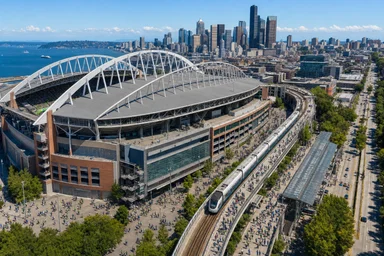
Vancouver’s experience offers a template—and a cautionary tale—for other World Cup host cities. Seattle, Los Angeles, and Mexico City, which will also host matches in 2026, are all racing to complete transit upgrades before the tournament. Seattle’s Link Light Rail, which covers 80 percent of stadium capacity, is already operational, but the city is adding new stations and increasing frequency. Los Angeles is expanding its Metro system, including the Purple Line extension to Westwood, though that project is not expected to be complete until 2027. Mexico City, which already has an extensive metro network, is focusing on station renovations and security upgrades.
Vancouver’s accelerated delivery required streamlined environmental approvals and labor agreements that waived overtime caps. These measures, while effective, may not be replicable in all jurisdictions. “Every city has its own regulatory framework and political dynamics,” says Curran. “What worked in Vancouver might not work in Los Angeles.”
There are also risks to quality. TransLink has flagged 3% of station finishes for rework, including cracked tiles and misaligned escalators. While minor, these defects highlight the trade-off between speed and precision. “When you rush, you make mistakes,” says Busby. “We’ve caught most of them, but there will be some that we only discover after opening.”
Comparisons to London’s Jubilee Line extension, which opened in time for the 2012 Olympics, are instructive. That project, which added 10 stations to the London Underground, was completed on time and on budget after a massive effort. But it required a dedicated delivery authority, generous contingency funding, and a willingness to accept design compromises. Vancouver’s Broadway extension followed a similar playbook, but on a smaller scale. “The Olympics and the World Cup are different beasts,” says Curran. “But the principles are the same: set a hard deadline, empower the project team, and accept that perfection is the enemy of good.”
As Vancouver prepares to welcome the world, the SkyTrain extension faces its first real test in the weeks after opening. TransLink will conduct a series of stress tests, simulating match-day crowds with volunteers, to identify bottlenecks and adjust schedules. The line’s performance during the World Cup will determine whether the accelerated timeline paid off—and whether the city can handle the next phase of expansion. “We’ve built the line, but now we have to prove it works,” says Desmond. “The World Cup is our final exam.”