32-Player Squads Force Roster Rest Rules for 2026 Knockout Phase
When FIFA confirmed the 2026 World Cup would expand to 48 teams, the immediate reaction centered on the tournament's scale. But the structural changes run deeper than a larger field. The introduction of 16 groups of three, a round of 32, and — most critically — 32-player squads with mandatory rest rules will reshape how managers build rosters and navigate a potential seven-match campaign. These are not cosmetic tweaks; they represent the most significant regulatory overhaul since the 1998 expansion to 32 teams.
48 Teams, 32 Knockout Berths: The New Math
The group stage format for 2026 abandons the familiar four-team groups for 16 groups of three. Each group will play a round-robin, with the top two advancing to a round of 32. This eliminates the traditional round-of-16 symmetry — where group winners face runners-up from adjacent groups — and creates a knockout bracket with no direct seeding from group performance. The result is a longer, more unpredictable path to the final.
For managers, the new math means every group match carries outsized importance. With only three games per group, a single slip-up can be fatal. Unlike the old format, where four teams allowed for recovery, a loss in a three-team group leaves little margin. The champion still plays seven matches, but the knockout phase now includes five rounds (round of 32, round of 16, quarterfinal, semifinal, final) instead of four, while the group stage remains three games. This structural shift creates unique squad-building pressures. Managers must plan for a knockout phase that begins immediately after the group stage, with no rest days between the final group match and the round of 32 in some schedules. For example, the schedule published by FIFA on December 15, 2024 shows no rest days between group stage and round of 32 for Group A. The condensed timeline demands depth across the squad, not just a strong starting eleven.
32-Player Squads: Why 26 No Longer Suffices
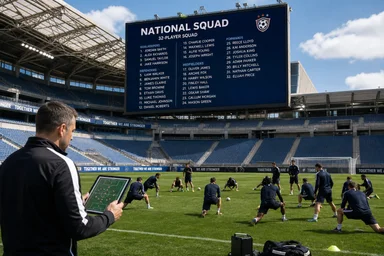
FIFA confirmed in late 2024 that 2026 rosters would expand from 26 to 32 players. The six additional spots are a direct response to the increased knockout rounds and the risk of injuries in a tournament that could stretch over roughly five weeks for the finalists. Managers pushed for larger training groups, arguing that a 26-player squad left little room for cover when players accumulated fatigue or knocks.
The expansion also reflects the reality of modern player workload. Elite footballers now routinely play 50–60 club matches per season before arriving at a World Cup. The 2022 tournament saw several teams struggle with injuries after a congested domestic calendar. With 32 players, managers can afford to leave key players out of group-stage matches entirely, preserving them for knockout rounds. The extra spots also allow for specialists — set-piece takers, penalty-saving goalkeepers, or players who excel in specific tactical systems — without sacrificing positional depth.
However, the larger squad creates its own challenges. Team cohesion can suffer when half the roster rarely plays. Managing egos and keeping fringe players motivated becomes a delicate balancing act. Some managers have expressed concern that 32 players make training sessions unwieldy and reduce the quality of tactical work. Nevertheless, the consensus among top federations is that the benefits outweigh the drawbacks, especially given the rest rules that may force rotation.
Roster Rest Rules: Mandatory Rotation Looms
Perhaps the most consequential innovation for 2026 is FIFA's introduction of mandatory rest rules. Under the new regulations, no player may start three consecutive matches. This rule applies to all knockout-phase games, including the round of 32, round of 16, quarterfinal, semifinal, and final, as well as group-stage matches. The rule is enforced via electronic match-day squad sheets that automatically flag violations.
The rest rule aims to protect player welfare in a tournament where a champion could play seven matches in roughly 32 days. Clubs lobbied heavily for such limits, concerned about burnout and injury risk for their star players. The rule also prevents managers from relying on a core of 11 or 12 players throughout the tournament, forcing genuine squad rotation.
Former FIFA technical director Marco van Basten argued that the rule undermines the competitive integrity of the knockout phase. A team that wins its group comfortably might rest players in the final group match, then face a round-of-32 opponent that had to play full strength. But FIFA's medical and technical committees concluded that the welfare argument took precedence. The rule applies equally to all teams, so the strategic challenge is universal: managers must plan their lineups across the entire tournament, not just match by match.
Practical implications are significant. A player who starts the first two group games and the round of 32 would be ineligible for the round of 16, meaning managers must have a second-choice lineup capable of advancing. This places a premium on versatile players who can fill multiple roles. For example, a full-back who can also play as a winger or a central midfielder who can drop into defense becomes invaluable for rotation planning.
Group-of-Three Chaos: Tiebreakers and Tactics
The return of three-team groups — last used in the 1982 and 1994 World Cups — introduces familiar headaches. With only three matches per group, final group games are not simultaneous, creating the possibility of collusion or tactical draws. In 1982, West Germany and Austria played a mutually beneficial draw that eliminated Algeria, leading to FIFA's rule that final group matches be played simultaneously in four-team groups. For 2026, FIFA has not mandated simultaneous kickoffs for three-team groups, raising concerns that similar scenarios could unfold.
Tiebreakers will rely on goal difference, goals scored, and head-to-head results between tied teams. Because each team plays only two group matches, goal difference can be volatile. A single heavy win or loss can decide advancement. Managers must plan for multiple scenarios, including the possibility that a draw in the final match guarantees progress for both teams at the expense of the third.
Squad rotation becomes a strategic weapon in this context. A manager who rests key players in the first match might have a stronger lineup for the decisive second game. Alternatively, starting strong and building a goal difference advantage allows for rotation later. The rest rules add another layer: a player who starts both group matches could be rested for the round of 32, but if the team advances, that player might be fresh for the round of 16. The permutations are complex, and data-driven analysis will be essential.
The Guardian's football correspondent Jonathan Wilson has suggested that three-team groups reduce the overall quality of the group stage, as teams play only two matches instead of three. The tournament loses 16 group-stage matches compared to the 48-team, 12-group format initially proposed (which was later scrapped). But the round of 32 ensures that more teams experience knockout football, which FIFA views as a positive for development.
Knockout Roadmap: Seven Matches to the Final
The champion's path in 2026 will consist of three group matches followed by five knockout rounds: round of 32, round of 16, quarterfinal, semifinal, and final. The third-place match remains, so the two losing semifinalists play an additional game. In total, a champion could play seven matches in roughly 32 days, a similar load to 2022 but with a more intense knockout schedule.
By comparison, the 2022 champion Argentina played six matches (three group, then round of 16, quarterfinal, semifinal, final) because the round of 32 did not exist. The extra knockout round increases the number of high-stakes matches and reduces rest days between games. The round of 32 typically falls three or four days after the final group match, leaving little time for recovery or tactical preparation.
Managers must pace their squads carefully. The rest rule ensures that no player starts three consecutive games, but it does not prevent a player from featuring in all seven matches as a substitute. However, the physical demands of seven high-intensity games in a month are extreme. Data from previous World Cups shows that teams that go deep often rely on a core of 14–16 players. With 32-player squads, managers can afford to rotate more freely, but maintaining rhythm and cohesion becomes a challenge.
The third-place match, often criticized as meaningless, takes on new significance in the expanded format. Teams that reach the semifinal play seven matches regardless, but the third-place match adds an extra game for the losing semifinalists, potentially affecting their preparation for future tournaments. Some federations have proposed eliminating the match, but FIFA has retained it for 2026.
Data-Driven Roster Construction
The expanded squad and rest rules will accelerate the use of analytics in roster selection. National team analytics departments — still relatively rare compared to club setups — are modeling injury probabilities based on player workload from the preceding club season. Players who have logged heavy minutes in the 2025–26 season may be managed more carefully, while those with lighter loads could be prioritized for group-stage starts.
Positional coverage becomes more important than star power. A team with two world-class left-backs but no reliable right-back may struggle to rotate effectively. Versatile players who can cover multiple positions are especially valuable. For example, a player who can play as a central midfielder and a center-back provides two rotation options in one roster spot. Set-piece specialists — such as a corner-kick taker who may not start but can be introduced for dead-ball situations — may earn roster spots that would have gone to more all-round players in previous tournaments.
Data on opponent tendencies also informs rotation. If a team's round-of-32 opponent typically presses high, a manager might rest a midfielder prone to losing possession under pressure. The rest rule forces managers to think two or three matches ahead, not just react to the immediate opponent. The German Football Association (DFB) has hired a dedicated load-management analyst to track player fatigue and recommend substitution patterns.
However, data is only one input. Experienced managers still rely on intuition and relationships. The human element — knowing when a player needs a mental break, not just a physical one — cannot be quantified. The best roster constructions will balance analytics with the intangible sense of squad morale and leadership.
Practical Takeaways for 2026 Managers
Based on the new regulations, several strategic principles emerge. First, managers should prepare two distinct lineups for the group stage, ensuring that no player starts all three group matches. This allows for rest and keeps the squad engaged. The rest rule does not apply to group matches in the same way — it applies to consecutive matches overall — but starting all three group games would make a player ineligible for the round of 32, so rotation is essential.
Second, identifying six core starters for knockout rounds — players who will start the most important matches — helps structure the rest of the squad. These players might be rested in group-stage games to preserve them for the knockout phase. For example, a star striker might start only one group match and then be unleashed in the round of 32.
Third, the rest rules can be used to manage yellow-card accumulation. Players who pick up a yellow card in the group stage might be rested in the round of 32 to avoid suspension for the round of 16. This adds another layer of strategic planning, as bookings carry over from group stage to knockout phase.
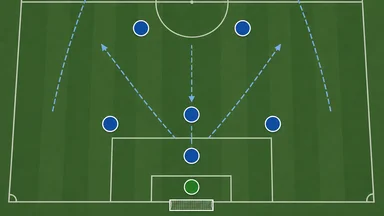
Fourth, managers should test three-man defensive systems in friendlies. With the need to rotate, having multiple tactical options — such as a back three that allows a different set of players to start — provides flexibility. The expanded squad makes it easier to carry specialists for specific systems.
Finally, scouting opponents' likely rotation patterns will become a key part of match preparation. If a team rests several starters in its final group match, the opponent in the round of 32 might face a weaker lineup. Conversely, a team that has not yet secured advancement might play full strength. The asymmetry of rest creates opportunities for savvy managers.
The 2026 World Cup represents a fundamental shift in tournament structure. The combination of 48 teams, 32-player squads, mandatory rest rules, and three-team groups will test the adaptability of every manager. Those who embrace the complexity — who treat squad construction as a seven-match puzzle rather than a series of one-off games — will have a clear advantage. Whether these changes improve the tournament's quality or simply increase the number of matches remains to be seen.