Semi-Automated Offside Rule Shifts VAR to Limb-Tracking by 2026
When the 2026 FIFA World Cup kicks off across 48 venues in North America, the offside flag will no longer be a human judgment call. FIFA has confirmed that semi-automated offside technology (SAOT) will be fully operational for the tournament, replacing the subjective freeze-frame decisions that have drawn criticism. Consider the 2018 World Cup match between France and Argentina, where Kylian Mbappe's goal was initially disallowed for offside before being overturned after a lengthy VAR review. The delay lasted over two minutes, and the final decision hinged on a single frame. Such incidents have fueled the push for a faster, more consistent system. SAOT, approved by the International Football Association Board (IFAB) after extensive testing, uses 12 dedicated cameras to track 29 body points per player, sending alerts to the video assistant referee (VAR) within seconds. This shift represents the most significant change to offside enforcement since the introduction of VAR itself.
Limb-Tracking Replaces Human Flag: How Semi-Automated Offside Works
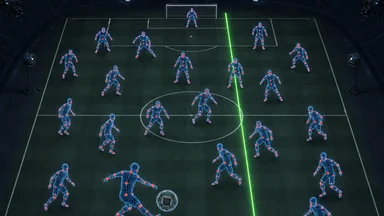
The core of SAOT is a limb-tracking system developed by Hawk-Eye and Second Spectrum. Twelve cameras mounted under the stadium roof capture data at 50 frames per second, generating a 3D skeleton for each player. The system identifies 29 specific points—including toes, knees, shoulders, and elbows—to determine the exact position of the attacking player relative to the second-to-last defender at the moment the ball is played. Unlike the current VAR process, which requires the video assistant to manually draw lines on a freeze-frame, SAOT automatically generates the offside line and sends a notification to the VAR official.
FIFA tested the system at the 2021 Arab Cup and the 2022 Club World Cup, with encouraging results. According to FIFA's own reports, the system correctly identified offside positions in less than three seconds in the vast majority of cases. The IFAB formally approved the technology for use in competitive matches in 2023, clearing the way for its implementation at the 2026 World Cup. The system does not make the final decision—the VAR still confirms the call—but it removes the most subjective step: choosing the exact frame when the ball was played.
Critics have pointed out that limb-tracking is only as reliable as the camera angles available. In crowded penalty areas, occlusion can sometimes cause the system to estimate a player's limb position rather than detect it directly. FIFA has acknowledged this limitation and instructed its technical team to install additional cameras at each venue to minimize blind spots. At the 2022 World Cup, a similar system was used on a trial basis for offside calls, but the 2026 implementation will be the first time it serves as the primary tool for all offside decisions.
The technology also addresses a persistent complaint from players and fans: the delay caused by VAR offside checks. During the 2022 tournament, each VAR review for offside took an average of roughly 70 seconds from the moment of the incident to the final decision. With SAOT, the initial alert reaches the VAR within seconds, and the human confirmation typically adds less than 20 seconds. FIFA's target for 2026 is a total review time of under 30 seconds for offside calls, a significant reduction that should keep the game flowing.
Ball-Tracking Chip Inside Match Ball Ends Ghost-Goal Debates
Alongside limb-tracking, the 2026 World Cup will use a ball-tracking chip to eliminate ambiguity about when the ball is played. The Adidas Oceaunz, the official match ball for the tournament, contains an inertial measurement unit (IMU) that records movement data at 500 frames per second. This chip identifies the exact moment a player kicks the ball, which is the critical reference point for any offside decision. The IMU data is transmitted wirelessly to a central processing unit, where it is synchronized with the limb-tracking camera feed.
The ball chip also helps resolve handball and goal-line controversies. By providing precise positional data of the ball at all times, the system can determine whether the ball touched a player's hand or arm, and whether it fully crossed the goal line. This was first deployed at the 2022 World Cup group stage, where it contributed to faster goal-line decisions. For the 2026 edition, the ball data will be fully integrated with the limb-tracking system, creating a single data stream for the VAR team.
Some former referees have expressed caution about over-reliance on the ball chip. In rare cases, the IMU might register a vibration from a defender's tackle rather than a deliberate kick, potentially triggering a false offside check. FIFA has responded by building a filter that ignores non-kick impacts, but the system is not infallible. During the 2024-25 Premier League season, which introduced a similar system, there were a few instances where the ball chip triggered a check on a deflection rather than a pass, leading to brief delays. Those incidents were resolved by the VAR reviewing the footage manually.
The combination of limb-tracking and ball-chip data is expected to reduce the number of controversial offside calls that dominated headlines in previous World Cups. In 2018, the use of VAR for offside led to several tightly contested calls where the margin was measured in centimeters, often after a lengthy review. The semi-automated system removes the human element from the line-drawing process, though the final decision still rests with the referee. As FIFA referee committee chairman Pierluigi Collina has noted, the technology is a tool, not a replacement for the officials' judgment.
VAR Scope Narrows: Clear-and-Obvious Threshold Hardened
Beyond offside, the 2026 World Cup will see a stricter application of the clear-and-obvious threshold for VAR interventions on fouls, penalties, and red cards. FIFA's referee committee, led by Collina, has issued new guidelines that instruct VAR officials to only recommend an on-field review if the error is indisputable. This means that marginal calls—where reasonable referees could disagree—will stand as the on-field decision, even if the VAR might have called it differently.
The change is a direct response to criticism from the 2018 and 2022 tournaments, where VAR frequently interrupted play for subjective calls that did not meet a high bar for error. In 2022, the average VAR check for a penalty or red card took roughly 90 seconds, and many fans felt the flow of the game was disrupted. By narrowing the scope, FIFA hopes to reduce the number of stoppages while maintaining accuracy for clear mistakes. Offside remains a factual, not judgmental, decision under the semi-automated system, so it will continue to be reviewed automatically.
Collina has emphasized that the on-field referee retains primacy for judgment calls. The VAR will only intervene if the on-field decision is clearly wrong—for example, a penalty awarded for a tackle that did not make contact with the attacker, or a red card given for a challenge that was clearly a fair shoulder-to-shoulder duel. For borderline incidents, the referee's original call stands. This approach mirrors the philosophy used in rugby union's TMO system, where the on-field decision carries significant weight.
Some managers and players have argued that the clear-and-obvious threshold is too vague and leads to inconsistency. During the 2024-25 season in various leagues, there were instances where one VAR deemed a challenge a clear error while another let it stand. FIFA has attempted to address this by providing extensive training to match officials, including video libraries of hundreds of incidents categorized by severity. The training seminars, which began in 2024, involve former elite referees from all confederations and aim to create a uniform interpretation across the 48 venues.
Data from the 2022 World Cup showed that VAR reviewed roughly one incident per match on average, with about one in four reviews leading to a change of decision. Under the new guidelines, FIFA expects the review rate to drop slightly, but the accuracy of overturned calls should increase. The trade-off is that some obvious errors might be missed if the VAR hesitates to intervene, but FIFA believes the current system errs too much on the side of intervention.
FIFA Referee Committee Drives Technical Implementation
The technical implementation of SAOT and the new VAR protocols is overseen by FIFA's Referee Committee, chaired by Pierluigi Collina. The committee includes former elite referees from each confederation, such as Italy's Nicola Rizzoli and Australia's Mark Shield, who bring firsthand experience of high-pressure tournament matches. Since 2023, the committee has worked closely with Hawk-Eye and Second Spectrum to refine the limb-tracking algorithms and ensure compatibility with the 48 stadiums.
Training for match officials began in early 2024, with a series of seminars held in Zurich and at regional centers. Referees practice using the SAOT interface, which displays the 3D skeleton overlay and the ball-chip data in real time. They also undergo scenario-based training where they must decide whether to recommend an on-field review based on the clear-and-obvious threshold. The goal is to create a consistent mental framework so that all 100-plus referees selected for the tournament apply the same standards.
One challenge is the diversity of stadium configurations. The 2026 World Cup will be hosted across the United States, Canada, and Mexico, with venues ranging from indoor arenas in Dallas to open-air stadiums in Mexico City. Each venue requires a customized camera installation to ensure adequate coverage of the entire pitch. FIFA's technical team has conducted site visits to all 16 host cities and developed a standard template for camera placement, with additional units for stadiums with unusual architecture.
The committee has also established a centralized VAR hub in New York City, where a team of backup VARs will monitor all matches simultaneously. This hub can provide additional support if the on-site VAR encounters technical issues, though the primary decision-making remains at the stadium. The hub is equipped with a direct fiber-optic link to each venue, ensuring minimal latency in data transmission. FIFA has budgeted roughly US$ 200 million for the entire technology package, including installation, training, and staffing.
Why 2026 World Cup Demands Faster Offside Decisions
The 2026 World Cup will be the largest in history, with 48 teams playing 104 matches over 39 days. This volume creates unique pressures on the officiating system. The group stage features simultaneous kick-offs for the final round of matches, meaning that the VAR team must process multiple incidents at the same time. In previous tournaments, VAR delays sometimes stretched beyond two minutes, causing frustration for players and broadcasters alike.
Broadcasters have a particular interest in minimizing dead time. Television networks pay billions for World Cup rights, and every minute of play is valuable for advertising and in-play betting markets. During the 2022 World Cup, the average VAR check took roughly 70 seconds for offside and 90 seconds for other incidents. With 104 matches, that adds up to hours of non-action. The semi-automated system is expected to cut offside review times to under 30 seconds, significantly reducing the total stoppage time attributable to VAR.
In-play betting operators also benefit from faster decisions. Bets placed on the outcome of a specific incident—such as whether a goal will stand—are often suspended during VAR checks. The longer the check, the longer the betting market is frozen, which can frustrate bettors and reduce revenue. FIFA has been in consultation with several betting integrity firms to ensure that the technology provides timely information without compromising fairness.
Player feedback has also shaped the push for speed. During the 2022 tournament, several players complained about the uncertainty created by long VAR delays, particularly when celebrating a goal only to have it reviewed minutes later. By reducing the review time, FIFA hopes that players can celebrate with confidence, knowing that the check will be completed before the restart. The limb-tracking system sends a vibration alert to the referee's watch when the offside check is complete, allowing play to resume quickly.
Data-Transparency Dashboard Planned for In-Stadium and Broadcast
To increase fan trust in the technology, FIFA will introduce a data-transparency dashboard that displays the limb-tracking skeleton overlay and ball trajectory on stadium giant screens and broadcast feeds. This continues the transparency initiative started at the 2022 World Cup, where offside line graphics were shown to viewers. The 2026 version will go further by showing a 3D animation of the offside decision, including the exact body points used to determine the line.
The dashboard will also replay the ball trajectory for handball and goal-line calls, showing whether the ball touched a player's arm or fully crossed the line. This is intended to demystify the decision-making process and reduce conspiracy theories that often arise after controversial calls. FIFA's research from the 2022 tournament indicated that fans who saw the offside line graphic were more likely to accept the decision, even if it went against their team.
However, there are concerns that too much transparency could backfire. Showing the limb-tracking skeleton in real time might reveal marginal offside calls that appear extremely tight, leading to debates about the accuracy of the technology. During the 2024-25 Premier League season, some broadcasts showed the skeleton overlay for offside calls, and social media erupted with arguments about whether the system correctly identified the relevant body parts. FIFA is aware of this risk and plans to show the overlay only after the decision is confirmed, not during the check.
The dashboard will be available in all 48 venues and on the official FIFA broadcast feed. Each stadium will have dedicated screens positioned near the main stand, and the broadcast feed will include a split-screen option that shows the live action alongside the replay. FIFA has partnered with a data visualization company to design the graphics, ensuring they are clear and intuitive without being cluttered. The goal is to make the technology visible but not intrusive.
Some journalists have argued that the transparency dashboard is a form of PR rather than a genuine accountability tool. If the system makes an error, the public will see the incorrect skeleton overlay, which could damage trust. FIFA has responded by emphasizing that the technology is tested rigorously and that errors are extremely rare. In the Premier League's first season with SAOT, the accuracy rate for offside calls was above 99%, according to league data. Still, the margin for error in professional football is measured in centimeters, and a single high-profile mistake could overshadow the overall success.
Early Adoption by Premier League and Serie A Informs Final Tweaks
The path to 2026 has been shaped by the early adoption of semi-automated offside technology in major domestic leagues. The Premier League introduced SAOT for the 2024-25 season, following a successful trial in the 2023-24 FA Cup. Serie A had already used the system since the 2023-24 campaign, with generally positive feedback from clubs and referees. La Liga and the Bundesliga trialed the technology in cup competitions during the 2025 season, and their findings have been shared with FIFA.
One key lesson from the Premier League was the need for additional camera angles in tight situations. In a few matches, the limb-tracking system struggled to differentiate between a player's arm and shoulder when the arm was raised. This led to a small number of incorrect offside calls that were overturned on review. Hawk-Eye responded by updating the algorithm to give more weight to the shoulder joint when the arm is raised above the head. FIFA has incorporated this fix into the 2026 protocol.
Serie A's experience highlighted the importance of clear communication with players and managers. In the early months of SAOT, some Italian coaches complained that they did not understand why certain offside calls were made, even after seeing the skeleton overlay. The league responded by distributing a detailed guide to all clubs, explaining how the system works and what constitutes an offside position under the new technology. FIFA has produced a similar guide for all 48 participating teams, which will be distributed during the pre-tournament training camps.
The Bundesliga trial, though limited to cup matches, revealed a potential issue with the ball-chip synchronization. In one match, the chip registered a kick that was actually a mis-hit pass, causing the offside check to use the wrong moment for the offside line. The system was able to correct itself by cross-referencing the camera data, but the incident prompted FIFA to add a manual override option for the VAR. If the VAR believes the ball chip has triggered incorrectly, they can manually select the correct frame using the camera feed.
Overall, the feedback from these leagues has been positive enough for FIFA to proceed with full implementation. Collina has stated that the technology is ready for the biggest stage, and that the 2026 World Cup will serve as a showcase for the future of officiating. However, not everyone is convinced. Some traditionalists argue that technology is eroding the human element of refereeing, and that offside should remain a judgment call. FIFA's response is that the technology does not replace the referee—it simply provides better information. The referee still decides whether to award a free kick or a penalty, and the on-field official retains full authority.
The 2026 World Cup will be a test case for whether semi-automated offside can deliver on its promise of faster, more accurate decisions without sacrificing the flow of the game. The early signs from domestic leagues are encouraging, but the pressure of a World Cup knockout match, with millions watching, is a different level of scrutiny. If the system performs well, it will likely become standard in all major tournaments. If it falters, the debate over technology in football will intensify. Either way, the offside flag as we know it is about to change. Yet the system is not without potential downsides. Concerns remain about over-reliance on technology, the risk of marginal errors in crowded areas, and the possibility that the clear-and-obvious threshold may be applied inconsistently across different referees. Moreover, the cost of implementation—estimated at US$ 200 million—could widen the gap between wealthy and less affluent football associations. Critics also worry that the pursuit of speed might compromise accuracy in borderline cases, and that the transparency dashboard, while informative, could fuel debates rather than quell them. As with any technological innovation in sports, the true test will be in the crucible of live competition, where every decision is scrutinized by millions.