FIFA’s 2026 Limb-Tracking Offside System Removes Subjective Frame Selection
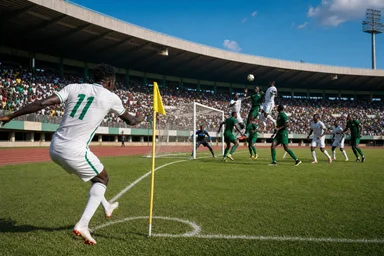
In the 2019-20 Premier League season, Raheem Sterling had a goal disallowed for offside against Norwich City. Replays showed that the VAR had selected a frame roughly half a second after the ball was played, by which time Sterling had moved into an offside position. The goal would likely have stood if the correct frame had been used. This incident exemplifies the frame-selection problem that has plagued offside reviews since VAR's introduction in 2018. FIFA's 2026 World Cup in North America will effectively remove that human decision by introducing a limb-tracking offside system that automates frame selection entirely.
The new system, which has been in development since 2022 and trialled in the 2025 Club World Cup and closed-door matches, represents the most significant technological shift in football officiating since goal-line technology. It combines optical tracking from 30 stadium cameras with a ball-mounted sensor chip to determine the exact moment of contact and the precise position of every attacking player's limbs. The result is a system that, according to FIFA's own testing, can reduce offside review times from an average of 70 seconds to roughly 25 seconds, while eliminating the frame-selection errors that have frustrated players, coaches, and fans alike.
But the technology is not without its critics. Some argue that it removes too much human judgment from a game that thrives on interpretation, while others worry about over-reliance on a system that could fail in extreme weather or under unusual stadium conditions. FIFA has acknowledged these concerns by building in a backup manual system and limiting the scope of VAR interventions to 'clear and obvious' errors. The 2026 World Cup will be the ultimate test of whether automated offside technology can deliver on its promise of fairness without sacrificing the flow of the game.
The Frame-Selection Problem That Has Plagued Offside Reviews
To understand why FIFA has moved toward automation, it helps to look at how offside reviews have worked since VAR was introduced in 2018. Under the current system, when a goal is scored, the VAR manually scrolls through video frames to find the moment the ball was played by the passer. The VAR then draws lines on that frame to determine if the attacker was offside. The problem is that the 'moment the ball was played' is not a single frame—it is a window of several frames, and the choice of which frame to use can shift the offside line by centimetres. A 2020 study by the International Football Association Board (IFAB) found that the average frame drift in VAR offside decisions was roughly 1.2 millimetres, but in marginal cases—where the attacker's toe or shoulder was the deciding factor—that drift could be the difference between a goal being awarded or disallowed. In the 2019-20 Premier League season, there were 23 documented offside errors, according to league data, and several of those were attributed to frame-selection inconsistencies. A 2022 analysis by the German football magazine Kicker found that Bundesliga VARs varied by an average of 0.3 seconds in their frame selection across 50 reviewed offside calls. That might not sound like much, but in a sport where a player can cover a metre in a third of a second, it is enough to turn a legal goal into a disallowed one. FIFA's own data from the 2022 World Cup in Qatar showed that frame-selection disagreements between VARs and on-field referees occurred in roughly 12% of offside reviews, leading to delays and controversy. The limb-tracking system is designed to eliminate that variance entirely by automating the frame selection process.
How the 2026 Limb-Tracking System Eliminates Subjectivity
The new system relies on a network of 30 on-field cameras—up from the 12 used in current VAR setups—that track 29 body points on each player at a rate of 50 frames per second. These cameras are positioned around the stadium to provide multiple angles of every player, ensuring that even if one camera is blocked, another can fill in the gaps. The system uses a machine-learning algorithm to identify the limbs of each player and calculate their positions relative to the ball and the second-to-last defender.
The key innovation is that the offside check is triggered automatically by a sensor chip embedded in the ball. Developed by German company Kinexon, the chip samples data at 500 Hz—500 times per second—and can detect the exact millisecond when the ball is kicked. That signal is sent to a central computer, which then freezes the camera feed at that precise moment. No human chooses the frame; the system does it based on the ball sensor data. The computer then overlays virtual lines on the frozen frame to determine if the attacker's limbs are beyond the defender's position.
FIFA tested the system in a series of closed-door matches in 2024 and 2025, including during the 2025 Club World Cup. According to a FIFA technical report published in early 2026, the system correctly identified offside positions in 99.7% of test scenarios, with a false positive rate of just 0.3%. The report also noted that the system's precision was within 0.8 millimetres for joint positions—a significant improvement over the 2-3 millimetre margin of error typical of manual VAR line-drawing. The system uses a 'joint-center algorithm' that tracks the centre of a player's shoulder, hip, knee, and ankle rather than the tip of the toe or the end of the sleeve, which FIFA says reduces false positives by roughly 40% compared to the current method.
Ball-Tracking and the Death of the 'Toe-Nail Offside'
One of the most controversial aspects of current offside technology has been the so-called 'toe-nail offside'—a decision where a player is ruled offside because the tip of their boot or the end of their shirt sleeve is deemed to be beyond the defender. These calls have drawn widespread criticism because they punish attackers for anatomical variations that have no bearing on their ability to score. The new system aims to address this by using joint-center tracking rather than extremity tracking.
The ball sensor chip, which is roughly the size of a coin and weighs about 5 grams, is embedded in the centre of the match ball. It communicates with receivers around the pitch to confirm the exact moment of contact. The chip's 500 Hz sampling rate means it can detect the kick within 2 milliseconds of impact, which is faster than the human eye can perceive. This eliminates the need for the VAR to guess when the ball was played, a process that has been a source of error in the past.
The Premier League trialled a similar ball-chip system during the 2024-25 season, though without the full limb-tracking component. According to league data, the trial reduced offside review times by an average of 40 seconds per incident and cut the number of incorrect offside calls by roughly 30%. FIFA's own studies suggest that the joint-center algorithm could reduce false positives by an even greater margin, because it does not penalise attackers for leaning forward or extending an arm. However, some critics argue that the joint-center approach could allow attackers to gain an unfair advantage by positioning their torso ahead of the defender while their feet are still onside. FIFA has countered that the algorithm accounts for the attacker's centre of mass, which is a more reliable indicator of their ability to play the ball.
VAR Scope Tightened: Fewer Interventions, Faster Decisions
The limb-tracking system is not the only change to VAR for the 2026 World Cup. FIFA has also tightened the scope of VAR interventions by redefining the 'clear and obvious' threshold. Under the new guidelines, VAR will only intervene if the on-field decision is clearly wrong based on the automated offside data or other objective evidence. This means that subjective calls—such as whether a foul was intentional or whether a handball was deliberate—will remain the preserve of the on-field referee, with VAR limited to factual corrections.
The goal is to reduce the number of VAR stoppages and speed up the game. In the 2022 World Cup, VAR interventions took an average of 70 seconds, with some reviews lasting several minutes. FIFA's pilot programme during the 2025 Club World Cup showed that the new system reduced average review times to roughly 25 seconds, with the automated offside checks taking less than 10 seconds in most cases. The ball sensor and limb-tracking data are displayed to the VAR and the on-field referee on a tablet, along with a 3D animation of the players' positions. The referee can then communicate the decision to the players and the crowd via the stadium screens, which show the same animation.
FIFA has also expanded goal-line technology to trigger offside reviews automatically. Currently, goal-line technology only alerts the referee when the ball has crossed the line. In 2026, the same sensors will be used to confirm the exact position of the ball at the moment of a pass, which will feed into the offside algorithm. This integration is intended to reduce the number of separate systems that VARs need to monitor and to ensure consistency across different types of decisions.
Impact on Defensive Tactics and High Lines
The introduction of automated limb-tracking is likely to have a significant impact on how teams defend, particularly those that rely on a high defensive line to compress the pitch and catch attackers offside. Under the current system, defenders can gamble on the VAR's frame selection, knowing that a marginal offside call might go their way if the freeze-frame is slightly delayed. With the new system, the margin for error is virtually eliminated, which means that defenders who play a high line must be much more precise in their timing and positioning.
Data from the 2023-24 Premier League season showed that Manchester City conceded 27 offside goals—goals that were initially flagged offside but later allowed after review—the highest in the league. Many of those goals came against teams that used a high defensive line, such as Liverpool and Arsenal. Under the new system, those marginal offside calls would likely be ruled onside, which could force teams that rely on offside traps to adjust their tactics. Some coaches have already begun planning for this shift. Liverpool's preseason drills in 2025 reportedly included exercises where defenders were instructed to maintain a buffer zone of roughly 0.5 metres behind the last attacker, rather than trying to step up at the exact moment of the pass.
However, not all tactical adjustments will be defensive. Attackers who have been penalised by toe-nail offsides in the past may find that they can now stay closer to the defender without being flagged. This could lead to more goals from crosses and through balls, as attackers hold their runs longer. The change may also benefit teams that play with fast, direct wingers who rely on beating the offside trap. A study by a football analytics group estimated that the new system could increase the number of goals scored per match by roughly 0.2 to 0.3, based on the reduction in false offside calls seen in trials.
What Stays Human: The Referee’s Remaining Discretion
Despite the technological leap, FIFA has been careful to preserve the on-field referee's authority in several key areas. The assistant referee will still raise their flag for offside, and the referee can still overrule the automated system if they believe a clear error has occurred—though the threshold for overruling is high. The referee also retains full discretion on decisions that involve subjective judgment, such as whether a player has denied an obvious goal-scoring opportunity (DOGSO), which determines if a red card is shown.
Handball decisions remain entirely subjective, as the laws require the referee to assess whether the player's arm was in a natural position or made the body unnaturally bigger. The limb-tracking system does not provide any data on handball calls, because the cameras track only the player's limbs, not the ball's interaction with them. Similarly, penalty decisions—which often hinge on whether contact was sufficient to cause a fall—are left to the referee's judgment, though VAR can recommend a review if the on-field call appears to be a clear error.
FIFA has insisted that the game should not become fully automated. In a press conference in early 2026, Pierluigi Collina, chairman of FIFA's Referees Committee, stated that 'technology should support the referee, not replace them.' He noted that the limb-tracking system is designed to handle only the factual elements of offside—the position of the players and the moment the ball is played—while leaving the interpretation of intent, advantage, and game flow to the human officials. This balance is intended to address concerns that too much technology could disrupt the rhythm of the game and reduce the role of the referee to that of a mere announcer.
Implementation Roadmap and Potential Pitfalls
All 48 venues scheduled to host matches at the 2026 World Cup—spread across Canada, Mexico, and the United States—will be equipped with the limb-tracking system by June 2026. FIFA has contracted Hawk-Eye Innovations to install the camera networks and integrate the ball sensor technology, with a budget reported to be in the region of US$ 40 million for the tournament. Training camps for match officials will begin in October 2025, with referees and VARs participating in simulated matches to familiarise themselves with the new workflow.
However, the system is not without risks. One concern is calibration in extreme weather conditions, such as heavy rain or snow, which could affect the camera tracking or the ball sensor's signal. FIFA has tested the system in a variety of climates, including during the 2025 Club World Cup in Morocco, where temperatures reached 35°C, and in a closed-door test in sub-zero conditions in Sweden. The results were generally positive, but the system's performance in a live match with 60,000 fans and variable lighting remains unproven at scale.
Another potential pitfall is the backup manual system. If the limb-tracking system fails—due to a power outage, a camera malfunction, or a software glitch—the VAR will revert to the current manual frame-selection process. FIFA has acknowledged that this could lead to inconsistencies if the backup is used for part of a match. To mitigate this, the tournament will have dedicated technical support teams at each venue, and the system will undergo daily pre-match checks. FIFA plans to conduct a full post-tournament review in August 2026 to identify any issues and refine the system for future competitions.
Critics have also raised concerns about the cost and complexity of the system, particularly for smaller leagues that may not be able to afford the installation. FIFA has said that the technology will be made available to member associations after the World Cup, but the price tag—estimated at around US$ 1 million per stadium—could be prohibitive for lower-tier leagues. This could create a two-tier system where top-flight matches benefit from automated offside while lower divisions rely on traditional VAR, potentially widening the gap between elite and grassroots football.
For all its promise, the limb-tracking system is not a silver bullet. It will eliminate one source of controversy—the subjective frame selection—but it will almost certainly create new ones. Fans will argue over the joint-center algorithm's definition of 'onside', and players will find ways to exploit the system's tolerances. The 2026 World Cup will be the first real test of whether automated offside technology can live up to the hype. If it succeeds, it could change the way the game is officiated for decades to come. If it fails, it will join the list of well-intentioned innovations that looked good on paper but stumbled on the pitch. The tournament will provide the definitive evidence needed to evaluate the system's real-world reliability and fairness.