Seattle’s Link Light Rail Covers 80 Percent of 2026 Stadium Capacity
When FIFA awarded the 2026 World Cup to the United States, Canada, and Mexico, Seattle’s bid included a target: its Link Light Rail system would move 80 percent of fans to and from matches at Lumen Field. With a stadium capacity of 72,000 and 16 matches scheduled across the tournament, that figure represents roughly 1.15 million passenger trips over six weeks. Sound Transit, the regional transit authority, has spent years preparing for this moment. But whether the system can deliver on that promise depends on a web of variables: train frequency, station capacity, schedule conflicts, and the sheer unpredictability of human behavior.
The 80 percent claim is not arbitrary. It stems from a detailed analysis of Link’s maximum throughput per hour and the stadium’s capacity. Sound Transit estimates that during peak event hours, Link can move 8,000 passengers per direction per hour. With multiple lines converging at Stadium Station—the station directly serving Lumen Field—the theoretical ceiling is higher. But as any transit planner will tell you, theoretical ceilings rarely survive contact with reality.
The 80% Target Hinges on One Number: 72,000
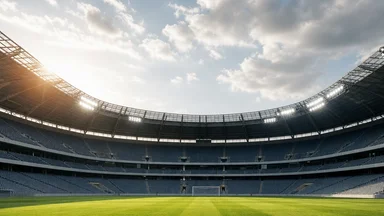
Lumen Field’s capacity for World Cup matches is 72,000, a figure that includes temporary seating added for the tournament. That number anchors all transit planning. If the stadium were smaller, the target would be lower; if it were larger, the system might struggle. Sound Transit’s goal is to move 57,600 fans per match via Link—80 percent of 72,000. The remaining 20 percent are expected to arrive by bus, bike, rideshare, or private vehicle.
To achieve that, Link would need to run at maximum frequency—roughly every 4 minutes during peak periods—for hours before and after each match. As of late 2024, peak frequency on the 1 Line (the main north-south corridor) is about 6 minutes. Closing that gap to 4 minutes requires additional trains and operators, which Sound Transit has committed to procuring. The agency’s 2023 service plan outlined a fleet expansion from 152 to 202 light rail vehicles by 2026.
The 80 percent figure is a target, not a guarantee. Even Sound Transit officials hedge when pressed. In a 2024 public meeting, the agency’s CEO noted that actual ridership will depend on “the day of the week, the kickoff time, and weather.” A rainy evening match could push more fans toward cars, lowering the rail share. Conversely, a sunny weekend afternoon could exceed projections.
Critics point out that the 80 percent target assumes near-perfect execution. Any disruption—a signal failure, a medical emergency on a train, a protest near the station—could cascade into delays that strand thousands. Seattle’s history with light rail disruptions is mixed. In 2023, a power outage on the 1 Line halted service for three hours, affecting an estimated 10,000 riders. During the World Cup, such an event could be catastrophic.
How Seattle’s Link Outpaces Other Transit Systems
Seattle’s Link Light Rail is often compared to Portland’s MAX and Vancouver’s SkyTrain, two other Pacific Northwest systems that have handled major sporting events. Portland’s MAX, which serves Providence Park (capacity 25,000), has a peak capacity of roughly 30,000 riders per hour across its entire network. Vancouver’s SkyTrain, which served BC Place (capacity 54,000) during the 2015 Women’s World Cup, can move about 22,000 passengers per hour per direction.
Link’s 8,000 per direction per hour seems modest by comparison. But Seattle’s advantage is concentration: Stadium Station sits at the junction of the 1 Line (north-south) and the 2 Line (east-west), creating a hub effect. During events, trains from both lines arrive at roughly the same time, doubling effective throughput. Sound Transit estimates that during a post-match surge, the station can clear 50,000 passengers in 90 minutes.
Still, actual throughput depends on train frequency. If trains run every 4 minutes, each carrying 200 passengers (roughly half of capacity), the system moves 3,000 per direction per 20-minute window. Over an hour, that’s 9,000 per direction. But that assumes perfect boarding and no dwell time. In reality, crowded platforms and door congestion slow things down. A 2019 study by the University of Washington’s Transportation Research Center, published in the Journal of Public Transportation, found that actual throughput at Stadium Station during Seahawks games was about 6,500 per hour per direction—20 percent below the theoretical maximum.
What Link lacks in raw speed it makes up for in reliability. Unlike Portland’s MAX, which shares streets with cars, Link runs on dedicated grade-separated tracks. It never hits traffic lights. That predictability is critical for event planning. FIFA requires host cities to guarantee that fans can reach the stadium within 90 minutes of kickoff. Link’s travel times from downtown Seattle are under 10 minutes; from the University of Washington, about 15 minutes. Those times are consistent regardless of road congestion.
The 2026 Match Schedule Creates a Transit Stress Test
The World Cup match schedule for Seattle has not been finalized, but FIFA’s template for multi-city tournaments typically includes matches on consecutive days or doubleheaders. In 1994, the last time the U.S. hosted, some venues hosted two matches on the same day. If Seattle gets a doubleheader, Link would face back-to-back surges: 72,000 fans arriving for the first match, then departing, then 72,000 more for the second.
Kickoff times will be staggered to ease flow. FIFA typically schedules matches at 1 p.m., 4 p.m., and 7 p.m. local time. A 1 p.m. match ends around 3 p.m., giving the system two hours to clear the first wave before the second wave arrives. That’s tight. Sound Transit plans to run extra trains during those windows, essentially creating a temporary shuttle service between downtown hotels and the stadium.
The post-match surge is the hardest part. After a match, 50,000 fans may try to board trains within 30 minutes. Sound Transit’s plan involves queuing systems at Stadium Station, with separate entrances for northbound and southbound trains. The agency has also considered using the adjacent King Street Station (Amtrak and Sounder commuter rail) as overflow, though that station’s capacity is limited.
Seattle has some experience with large events. The 2015 Copa América hosted five matches at CenturyLink Field (now Lumen Field), with crowds of up to 45,000. Light rail handled about 60 percent of those fans, according to Sound Transit. The 2023 NHL Winter Classic at T-Mobile Park drew 47,000, with Link carrying roughly 55 percent. Both events saw delays but no major failures. The World Cup, however, is a different scale. UEFA’s 2020 European Championship final at Wembley saw 90,000 fans, and London’s Tube system struggled with overcrowding at stations.
On-Street Congestion vs. Rail Reliability
For fans who choose not to take light rail, the alternatives are grim. Interstate 5, the main north-south artery past Lumen Field, is already one of the most congested highways in the U.S. During Seahawks games, travel times on I-5 can triple. I-90, which connects Seattle to the eastside suburbs, is little better. The Washington State Department of Transportation has warned that World Cup traffic could cause gridlock for miles around the stadium.
Link avoids traffic lights entirely, but it cannot avoid the crowds at Stadium Station. The station has two platforms, each about 300 feet long, capable of holding roughly 1,500 people. During a surge, those platforms fill up in minutes. Sound Transit plans to use portable barriers and staff to control access, but the geometry is tight. The station sits under a highway overpass, limiting expansion options.
Ride-hail services like Uber and Lyft will have designated drop-off zones far from the stadium—roughly a 15-minute walk. That’s intentional: the city wants to discourage cars near the venue. Seattle’s parking supply near Lumen Field is limited to about 10,000 spaces, most of which are reserved for season ticket holders and VIPs. The city has not announced plans to add temporary lots for 2026.
For many fans, rail becomes the default option by elimination. That puts enormous pressure on Sound Transit to perform. The agency has hired additional security and maintenance staff for the tournament, and it is testing a new automated fare collection system that can process 60 taps per minute per gate. Still, any glitch could push frustrated fans toward cars, creating a vicious cycle of more cars, more congestion, and slower buses.
What Other Host Cities Can Learn from Seattle
Seattle’s transit model is not easily replicable. Los Angeles, which will host eight matches at SoFi Stadium (capacity 70,000), has a rail system that covers only 105 miles compared to Seattle’s 26 miles of light rail. LA’s Metro is expanding, but as of 2024, only about 20 percent of fans to SoFi arrive by transit. The rest drive, contributing to legendary traffic.
New York/New Jersey, hosting matches at MetLife Stadium (capacity 82,500), has the PATH train and NJ Transit, but both systems face capacity constraints. PATH’s peak capacity is about 30,000 passengers per hour, but MetLife’s location in the Meadowlands means fans must transfer from trains to shuttle buses, adding 20 minutes to the trip. Seattle’s single-corridor model is simpler: riders get off the train and walk 200 feet to the stadium gate.
Investment per mile is another factor. Seattle’s Link cost roughly $200 million per mile to build, compared to $400 million per mile for LA’s Purple Line extension. That lower cost allowed Seattle to build a system that directly serves its stadium district. Other cities with older, more complex systems may find it harder to replicate that efficiency.
Geography matters too. Seattle’s stadium sits in a narrow isthmus between Puget Sound and Lake Washington, forcing most fans to approach from the north or south along a single corridor. That makes Link’s linear design well-suited to the city’s layout. In sprawling cities like Dallas or Houston, where stadiums are surrounded by parking lots, rail coverage is patchy. Seattle’s density is an advantage that stems from its geography, but other cities with different layouts may need alternative solutions.
The Business Case for Transit-Oriented Stadium Design
Lumen Field’s location at a rail junction was no accident. When the stadium was built in 2002, then-owner Paul Allen insisted on a site adjacent to the planned light rail line. The result is a stadium that is literally built on top of a transit hub. That foresight has paid dividends for decades. During Seahawks games, about 40 percent of fans arrive by transit. For Sounders FC matches, that figure rises to 50 percent.
Developers have taken notice. Since the 1 Line opened in 2009, more than 10,000 apartments have been built within a half-mile of Stadium Station, according to the city’s planning department. That density creates a virtuous cycle: more residents near the station means more potential riders for events. FIFA’s bid evaluation criteria included a “transportation” category, and Seattle scored highly partly because of its rail connection.
The long-term return on investment for the city extends beyond 2026. The light rail system will continue to serve the stadium for decades, reducing parking demand and traffic. Sound Transit estimates that each World Cup match will generate $2 million in transit fare revenue alone. That money can be reinvested into system upgrades.
But the business case has limits. Building a stadium near a transit line requires coordination between multiple agencies—city government, transit authority, stadium owners—that does not always happen. In cities where the stadium was built first and transit came later, like Atlanta’s Mercedes-Benz Stadium, ridership is lower. Seattle’s success story is as much about timing as design.
Beyond 2026: Will Light Rail Reach 100% Coverage?
Sound Transit has ambitious expansion plans. The Federal Way extension, which will add 7.8 miles of track south of Seattle, is scheduled to open in 2026, just before the World Cup. That line will bring Link within walking distance of the Federal Way Transit Center, a major bus hub. The Ballard and West Seattle extensions, however, are delayed until at least 2030 due to funding shortfalls and design challenges.
Stadium capacity may grow with renovations. Lumen Field has room to add permanent seats, and the Seahawks have discussed expanding to 75,000. If that happens, the 80 percent target would need to be re-evaluated. Sound Transit’s long-range plan includes a second downtown tunnel that could double capacity through the core, but that project is still in the environmental review phase.
Autonomous shuttles could fill gaps. The city of Seattle has tested autonomous shuttles in the South Lake Union neighborhood, and transit planners see them as a way to connect fans from outlying parking lots to the station. But the technology is unproven at scale, and regulatory hurdles remain.
Full coverage—moving 100 percent of fans via transit—is at least a decade away, if it ever comes. For 2026, the 80 percent target is ambitious enough. Whether Sound Transit hits it depends on execution, luck, and the patience of 72,000 fans per match. The system is designed for a stress test. The World Cup will be the ultimate exam, and the outcome remains uncertain.