Panama’s 2026 Pressing Triggers Rank Third in CONCACAF Qualifying
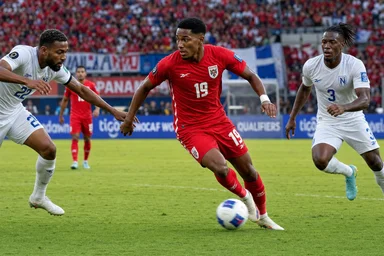
When Panama pressed Costa Rica high up the pitch in the 23rd minute of a World Cup qualifier, the trap was subtle. Costa Rica’s center-back received a pass near the edge of his own box, took one heavy touch, and within two seconds three Panamanian shirts converged. The ball was won, a quick pass went to the wing, and Panama earned a corner. That sequence—a single heavy touch triggering a coordinated swarm—is one reason Panama’s pressing metrics rank third in CONCACAF qualifying for the 2026 World Cup.
According to Opta data from FIFA match reports for the 2026 qualifying cycle up to late 2024, Panama’s passes allowed per defensive action (PPDA) stands at 8.7 against top-half opponents. Only Canada (7.9) and the United States (8.2) have higher pressing intensity. Panama’s figure puts them ahead of Mexico (9.4) and Costa Rica (10.1), two traditional powers that have historically relied on individual duels rather than coordinated pressing. The metric is a blunt instrument, but it points to a tactical identity that Thomas Christiansen has built since taking over in 2020.
The pressing identity is rooted in specific triggers that Christiansen has drilled into his squad. By analyzing these triggers, the role of the back three, and the practical challenges of sustaining intensity, we can understand why Panama’s pressing is effective, where the numbers might mislead, and what opponents are likely to do in response. The data draws on matches played up to late 2024, with specific examples from games against Costa Rica, Jamaica, and El Salvador.
The Pressing Metric That Separates Panama
PPDA measures the number of passes a team allows per defensive action (a tackle, interception, foul, or clearance) in the opponent’s own half. A lower number indicates more intense pressing. Panama’s 8.7 against top-half opponents means defenders are forced to act roughly every nine passes. That rate is aggressive but sustainable because the press is triggered selectively, not sustained for 90 minutes.
Canada leads with 7.9, a figure that reflects their athletic midfield and willingness to chase down long balls. The USA sits at 8.2, thanks to a high-energy front line that includes players like Christian Pulisic and Folarin Balogun. Panama’s 8.7 is close enough to suggest they can disrupt opponents in the same tier, especially at home in the Estadio Rommel Fernández, where crowd noise and synthetic turf add to the pressure.
What makes Panama’s metric notable is the context. Mexico, historically the region’s dominant team, manages only 9.4 PPDA. That gap of 0.7 might seem small, but in a qualifying cycle where margins decide who goes to the World Cup, it represents roughly one extra defensive action per 12 opponent passes. Over a match, that can mean two or three additional turnovers in dangerous areas.
The data also shows that Panama’s pressing is concentrated in the central third. Roughly 55% of their defensive actions occur between the halfway line and the opponent’s penalty area, compared to 48% for Mexico. This suggests a coordinated effort to squeeze the build-up phase, rather than chasing deep in the final third where risks are higher.
Thomas Christiansen’s Tactical Blueprint
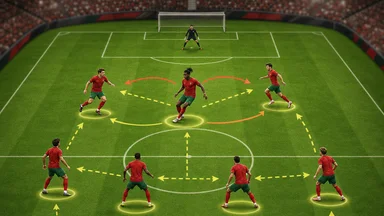
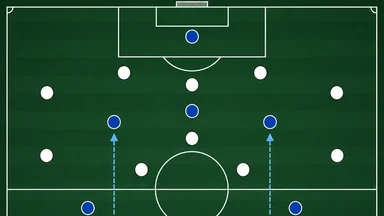
Thomas Christiansen, the Danish-born coach who led Panama to the 2022 World Cup, has refined his system over four years. His blueprint starts with a back three that pushes high, sometimes to the midfield line, and a front two that triggers the press on specific cues. The wingbacks pinch inward to compress the half-spaces, forcing opponents to play through the center where Panama’s midfield rotates to cover.
The system was not invented overnight. After Panama’s 2022 World Cup campaign, where they conceded six goals in three matches, Christiansen identified pressing as the area with the most room for improvement. He studied the pressing patterns of European teams like Spain and Germany, but adapted them to his squad’s strengths: pace in the wide areas and a central midfield that can read passing lanes.
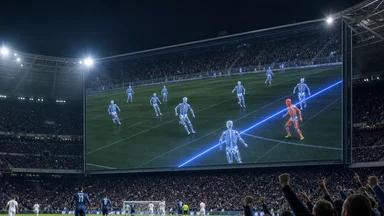
In training, Christiansen emphasizes three triggers: (1) when an opponent’s fullback receives with his back to goal, (2) when a center-back takes a heavy touch, and (3) when the goalkeeper rolls the ball to the weak foot of a defender. These triggers are drilled repeatedly, and players are instructed to react as a unit rather than individually. The result is a coordinated swarm that often forces rushed passes or turnovers.
The role of the wingbacks is critical. Players like Eric Davis and Michael Murillo tuck narrow when the press is triggered, cutting off the switch of play. This forces opponents to play through the middle, where central midfielders Adalberto Carrasquilla and Aníbal Godoy can step in. Carrasquilla, in particular, has developed a reputation for reading passes before they are played.
Three Specific Pressing Triggers in Action
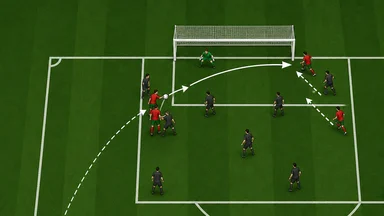
In the 23rd minute of a qualifier against Costa Rica, the trigger was a heavy touch. Costa Rica’s center-back, under no immediate pressure, received a pass from the goalkeeper. His first touch was slightly too long, rolling a yard ahead of him. Immediately, Panama’s striker, Cecilio Waterman, sprinted toward the ball, while the nearest midfielder closed the passing lane to the left back. Within three seconds, three Panamanian players surrounded the center-back, who lost possession. The turnover led to a shot from outside the box that forced a save.
A second trigger appeared in the 67th minute of a match against Jamaica. Jamaica’s goalkeeper rolled the ball to his left-back, whose weaker foot is his left. Panama’s right wingback, Michael Murillo, had been instructed to press the fullback as soon as he received on that side. Murillo closed quickly, forcing the fullback to turn back inside. The pass went to the center-back, who was immediately pressed by Panama’s second striker, José Fajardo. The ball was won, and Panama created a chance that nearly led to a goal.
The third trigger, less common but effective, is when an opponent’s fullback receives with his back to goal. In a qualifier against El Salvador, Panama’s wingback pressed high as the fullback collected a pass near the touchline. With his back to the field, the fullback had no passing option forward. He tried to shield the ball but was dispossessed by a supporting midfielder. Panama scored from the resulting attack.
These examples show that Panama’s pressing is not random. It is based on observable cues that players are trained to recognize. The triggers are simple, but executing them requires discipline and fitness. When one player steps, the entire unit must shift, and any hesitation can leave gaps.
Why PPDA Alone Understates Their Disruption
PPDA is a useful shortcut, but it can understate the quality of pressing. A team that forces passes into low-value zones may have a higher PPDA but still achieve effective disruption. Panama’s pressing often pushes opponents to play sideways or backward, reducing the number of progressive passes they complete. According to data from the qualifying cycle, opponents against Panama complete only 62% of their progressive passes, compared to 68% against Mexico.
The expected threat generated from regains is another layer. According to Opta's expected threat model, when Panama wins the ball high, they often create shots inside the box. Their xG from high turnovers is roughly 0.12 per match, which is in the top four in CONCACAF. That number matters because it converts possession into danger. A team that presses but cannot create shots is wasting energy.
Opponents also adjust their passing patterns when facing Panama. Teams that normally build through the center often switch to longer passes to bypass the press. In the match against Jamaica, Jamaica attempted 22 long balls from their own half, compared to their average of 14. That adjustment reduces Panama’s pressing opportunities but also cedes possession. Panama’s defenders, particularly the back three, are comfortable dealing with long balls, as they are often positioned high enough to head the ball clear.
The trade-off is that a high press leaves space behind. Panama’s goalkeeper, Orlando Mosquera, has been tested on several occasions when a long ball beats the defensive line. Mosquera’s sweeper skills are adequate, but he is not among the quickest in the region. This vulnerability is one reason some analysts argue that Panama should occasionally drop into a mid-block, especially against faster forwards.
Comparing with Top Rivals: Canada and USA
Canada’s pressing is built on athleticism. Players like Alphonso Davies and Jonathan David can cover ground quickly, allowing Canada to press in a 4-4-2 that frequently becomes a 4-2-4. Their PPDA of 7.9 is the best in CONCACAF, but it comes with a cost: Canada’s pressing tends to fade in the second half, especially in matches played at altitude or in heat. Panama’s pressing, by contrast, is more selective and thus more sustainable.
The USA’s pressing under Gregg Berhalter (and later under new staff) has evolved into a structured system that uses the front three to cut passing lanes. Their PPDA of 8.2 reflects a disciplined approach, but their pressing is sometimes less aggressive against teams that sit deep. Against Panama, the USA struggled to press effectively in a 1-1 draw in 2024, partly because Panama’s back three offered good passing options to escape pressure.
Mexico, at 9.4 PPDA, relies more on individual duels than coordinated pressing. Their defensive actions are often the result of one player stepping out, rather than a unit shifting. This approach can be effective when the individual wins the duel, but it leaves gaps when he loses. Panama’s collective pressing gives them an advantage in consistency, especially in matches where the opponent can isolate defenders one-on-one.
The gap between Panama and the top two is narrowing. In the most recent qualifying window, Panama recorded a PPDA of 8.3 against Canada, their best performance against a top opponent. However, against elite teams like Canada, Panama's press has been less effective in terms of results, as seen in their 2-0 loss in 2024. In that match, Canada bypassed Panama's press with quick vertical passes and exploited the space behind the high defensive line. This highlights a key limitation: Panama's pressing is effective against teams that build slowly, but struggles against teams with fast transitions. If they can sustain their intensity while addressing this vulnerability, they will likely secure a direct qualification spot for 2026.
Drilling Down to the Back-Three Foundation
The back three is the foundation of Panama’s pressing. Central defenders Fariña, Escobar, and Córdoba push high, often stepping into midfield to engage opponents. When the press is triggered, they move as a unit, maintaining a compact shape that reduces space. The fullbacks, who in a back three are wingbacks, tuck narrow when the press is activated, preventing the opponent from switching play to the far side.
Goalkeeper Orlando Mosquera plays a crucial role as a sweeper. He is comfortable coming off his line to clear long balls that bypass the defensive line. His positioning allows the central defenders to push high without fear of being beaten by a through ball. In the match against Costa Rica, Mosquera made three runs outside his box to clear balls, each time preventing a potential counter-attack.
The high line creates risks, but Panama’s defenders are experienced in offside traps. They have been caught out occasionally, most notably against Honduras in a 2-1 loss where two goals came from balls over the top. That match highlighted the need for better communication between the center-backs and the goalkeeper.
Christiansen has also experimented with a back four in some matches, but the back three remains the primary shape. It allows the wingbacks to press high while still having three central defenders to cover. Against teams that play with two strikers, the back three can match up man-for-man, reducing the need for midfielders to drop deep.
Practical Takeaways for 2026 Qualifying
Sustaining a high press over a qualifying campaign requires rotation. Panama’s squad depth is not as deep as Canada or the USA, so Christiansen must manage minutes carefully. Key players like Carrasquilla, Godoy, and Quintero are essential, and their fitness will determine whether Panama can maintain their pressing intensity. In the 2024 Gold Cup, Panama’s press dropped noticeably in the second half of matches when substitutes were introduced. While rotation is necessary, it risks disrupting the pressing cohesion that Panama has built. The substitutes may not be as familiar with the triggers, leading to gaps in the press.
Opponents will adjust. After facing Panama, several coaches have noted the need for longer passes to bypass the press. In response, Panama may need to vary their defensive approach, occasionally dropping into a mid-block to keep opponents guessing. Against teams like Mexico, who have the technical ability to play through pressure, a more conservative approach might be necessary. Another counter-argument is that Panama's press has been less effective against teams that use quick, direct attacks, such as Canada. In their 2-0 loss, Canada bypassed the press with long balls and fast wingers, exposing the space behind Panama's high line.
Set-piece vulnerability is another concern. When Panama loses possession while pressing high, they are exposed to counter-attacks. In the 2024 qualifier against Jamaica, a turnover from a high press led to a breakaway that nearly resulted in a goal. Christiansen has worked on the counter-press, but it remains a work in progress.
Finally, Panama needs an alternative low-block plan. When they face teams that sit deep themselves, pressing becomes less effective because the opponent is already in a defensive shape. In those matches, Panama has struggled to create chances, as seen in a 0-0 draw against Guatemala. Developing a patient possession game would complement their pressing identity. The pieces are in place, but the margin for error is small. Panama’s pressing triggers are a genuine strength, but they are not a guarantee of success.
To further illustrate the challenges, consider the match against Honduras in 2024. Panama pressed aggressively in the first half, forcing several turnovers, but Honduras adjusted by using long balls to bypass the press. In the second half, Honduras scored twice on counter-attacks, exploiting the space left by Panama's high line. This match demonstrates that while Panama's press can be effective, it requires constant adaptation and discipline to avoid being exploited.