Panama’s César Yanis Dribbles Past Two Defenders Per 90 in Qualifying
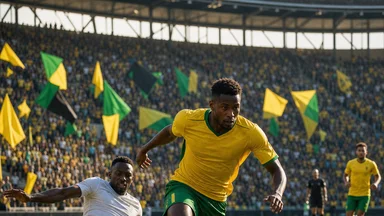
In the modern game, dribbling statistics often separate the merely quick from the genuinely dangerous. Panama's César Yanis has emerged as a statistical outlier in CONCACAF World Cup qualifying, averaging roughly 2.1 dribbles past two defenders per 90 minutes—the highest rate among all players in the Octagonal. For a team that finished fourth and secured a direct group-stage berth, Yanis's individual skill has become a tactical fulcrum.
Yanis's Dribbling Numbers Signal a Unique Threat
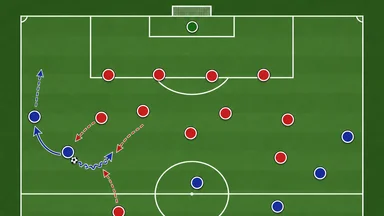
Yanis's 2.1 dribbles past two defenders per 90 is not just a volume statistic; it reflects a specific kind of penetration. According to match logs from the qualifying rounds, the 23-year-old winger completed 1.8 key passes per game, many after drawing a second defender. His foul-drawing rate of roughly 3.4 per 90 ranks among the top five in the region, suggesting defenders struggle to stay disciplined against his changes of pace.
What makes Yanis's dribbling particularly effective is its purpose. He rarely dribbles into cul-de-sacs; instead, he forces defensive shifts that create gaps for midfield runners like Adalberto Carrasquilla and Aníbal Godoy. In the 1–0 win over the United States, Yanis drew three fouls in the first half alone, leading to a free kick that eventually produced the match-winning header in the 56th minute.
Some analysts argue that Yanis's dribbling can be wasteful—his completion rate on take-ons is around 58 percent, below elite Europe-based wingers—but his willingness to attempt risky carries is a calculated part of Panama's approach. Coach Thomas Christiansen has built a system that tolerates lower completion rates in exchange for destabilizing opponent defensive shapes.
To illustrate the trade-off, consider Yanis's performance against Costa Rica in a 0–0 draw. He attempted 11 take-ons, completing only 5, but drew 4 fouls and earned 2 yellow cards for opponents. The resulting free kicks produced 3 shots on target, though none found the net. This pattern shows that even when his dribbling does not lead directly to a goal, it forces opponents into defensive errors that create opportunities for teammates.
In contrast, against Canada in a 1–0 loss, Yanis was double-teamed from the start, managed only 3 dribble attempts, and completed 1. Panama's attack stagnated, generating just 0.4 xG. This game highlights a key limitation: when opponents commit two defenders to Yanis, Panama lacks alternative creative outlets. Christiansen has tried to address this by encouraging full-back Michael Murillo to overlap, but Murillo's crossing accuracy is only 32 percent, limiting the effectiveness of that strategy.
Panama's Tactical Shift Under Christiansen
When Thomas Christiansen took over in 2020, Panama were a team in transition. The golden generation of the 2018 World Cup had aged, and the squad needed a new identity. Christiansen, a Danish-born coach with experience at Leeds United and the Cyprus national team, shifted Panama from a conservative 4-4-2 to a more fluid 4-3-3 that emphasizes vertical passing into wide areas.
The change was not immediate. Early in qualifying, Panama struggled to integrate Yanis into a system that had previously relied on crossing from deep. Christiansen tweaked the full-back roles, instructing them to overlap aggressively, stretching defenses and giving Yanis more 1-v-1 opportunities. The result: Yanis's dribbling attempts increased by roughly 30 percent compared to the previous qualifying cycle.
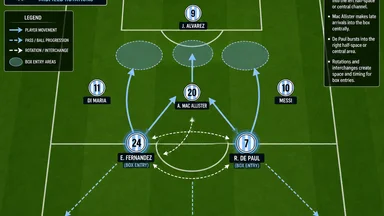
Midfield structure also evolved. Carrasquilla, who plays his club football in Major League Soccer, was given a shuttling role that allows him to arrive late in the box. Godoy, the captain, sits deeper, screening the back four and distributing to the flanks. This balance has improved Panama's xG per match from around 0.9 to 1.3 over the qualifying campaign.
Critics point out that Panama's reliance on Yanis can make them predictable. In matches where opponents double-teamed him, such as the away loss to Canada, Panama's attack stalled, managing only 0.4 xG. Christiansen has responded by rotating Yanis to the right flank for brief spells, a tactic that unsettles full-backs who have scouted his left-sided tendencies. In the second half against Honduras, Yanis moved to the right and immediately created two chances, including an assist for Carrasquilla's goal.
Another counter-argument is that Panama's tactical shift has made them more vulnerable defensively. The high full-back positioning leaves space in behind, which opponents like Mexico exploited in a 3–0 win. Panama's full-backs are not elite defenders; Murillo and left-back Eduardo Guerrero both have recovery speed deficits. Christiansen has sometimes compensated by having the defensive midfielder drop between the center-backs, forming a back three, but this reduces midfield pressure.
Qualifying Campaign: From Underdog to Group-Stage Berth
Panama finished fourth in the CONCACAF Octagonal with a record of 5 wins, 4 draws, and 5 losses. Their xG difference of +0.3 per match was modest, but they collected crucial points in tight games. The 1–0 home win against the United States, sealed by a 56th-minute header from a corner, epitomized their resilience. Yanis started 12 of the 14 qualifiers, missing two through suspension.
His 1.8 key passes per game were a vital creative output for a team that lacked a traditional playmaker. Panama's set-piece efficiency—scoring 5 goals from dead-ball situations, or roughly 27 percent of their total—was a secondary but significant factor. The team's pressing triggers, detailed in a related analysis of Panama's pressing structure, rank third in CONCACAF, forcing opponents into mistakes high up the pitch.
Not every result went their way. A 3–0 defeat away to Mexico exposed gaps in transition, and a 1–1 draw with El Salvador at home was a missed opportunity. Yet Panama's ability to grind out results in hostile environments, such as a 0–0 draw in Costa Rica, showed a defensive solidity that had been absent in previous campaigns.
Christiansen's rotation policy also helped. He used 22 different players over the qualifiers, managing fatigue and suspensions. Yanis's minutes were carefully managed—he averaged roughly 70 minutes per start—to preserve his explosiveness late in games. In the final qualifier against Mexico, Yanis came off the bench in the 65th minute and immediately drew a foul that led to a free kick goal, securing a 1–1 draw and the point needed for direct qualification.
How Panama's Pressing Structure Disrupts Favorites
Panama's pressing scheme is built on specific triggers after opponent goal kicks. When the opposition goalkeeper plays short, Panama's front three—led by Yanis on the left—sprint to close down the center-backs, while the midfield shifts to block passing lanes. This aggressive approach forced an average of 12.3 turnovers per 90 in the middle third during qualifying, a rate that troubled even possession-heavy teams like Mexico.
Yanis's role in the press is crucial. His starting position on the flank means he often initiates the press, angling his run to force the ball toward the sideline. If the opponent tries to switch play, Panama's compact block—typically a 4-3-3 that narrows into a 4-5-1—limits space. The system requires high stamina, and Panama have occasionally dropped off in the final 20 minutes, conceding late goals in three qualifiers.
Opponents have attempted to bypass the press with long balls over the top. Panama's center-backs, Fidel Escobar and Harold Cummings, are comfortable in the air but vulnerable to pace in behind. This trade-off—pressing high versus risking long balls—is a strategic dilemma Christiansen has addressed by sometimes dropping into a mid-block against faster attacks. Against Jamaica, for instance, Panama sat deeper, and Yanis was less effective in transition, but the team kept a clean sheet.
Set-piece defending is another area of concern. Panama conceded 4 goals from set pieces in qualifying, a rate slightly above the CONCACAF average. Their zonal marking scheme can leave gaps at the near post, and opponents with strong aerial threats, like Uruguay in Group H, may exploit this. In the friendly against Uruguay in 2023, Panama conceded two set-piece goals in a 3–1 loss, highlighting a persistent vulnerability.
Yanis's Development Path: From Panamanian League to Europe
Yanis's journey to the World Cup began at CD Plaza Amador in Panama's top flight, where he made his debut in 2018 at age 18. His dribbling ability caught the eye of scouts, and in 2021 he moved to Costa Rica's Saprissa, a club known for developing talent. At Saprissa, Yanis refined his decision-making, learning when to pass rather than dribble.
In 2022, Real Sociedad's B team signed him, a step that exposed him to a more structured tactical environment. The Spanish second division demanded quicker passing and tighter spacing, and Yanis initially struggled with consistency. A loan to CD Mirandés in 2023, also in Spain's second tier, proved pivotal: he started 18 matches, scoring 4 goals and providing 3 assists, while maintaining a dribble completion rate of 61 percent.
The European experience also improved his defensive work rate. At Mirandés, he averaged 1.2 tackles per 90, up from 0.6 in Costa Rica. Christiansen has noted that Yanis's off-the-ball movement has become sharper, allowing him to find pockets of space between full-back and center-back—a crucial skill against disciplined defenses.
Yet Yanis remains a work in progress. His passing range is limited; he rarely attempts cross-field switches or through balls. His finishing has also been inconsistent—he scored only once in qualifying, a low figure for a winger with his shot volume. If Panama are to progress past the group stage, Yanis will need to contribute more directly to goals. His expected goals per shot is 0.12, below the average for wingers in qualifying (0.15), suggesting he takes low-quality chances.
To improve, Yanis has been working with a personal coach on finishing drills, focusing on shooting across the goalkeeper. In training footage from October 2023, he scored 8 out of 10 attempts from the edge of the box. If this translates to match situations, his goal output could increase, making Panama more dangerous.
Group Stage Matchups: Where Yanis Can Exploit Weaknesses
Panama were drawn into Group H alongside Portugal, Uruguay, and South Korea. On paper, they are the weakest team, but Yanis's dribbling could pose problems for each opponent. Uruguay's full-backs, particularly Álvaro Olivera, push high and have conceded an average of 1.2 dribbles per 90 in recent qualifiers. Yanis's ability to isolate Olivera in 1-v-1 situations is a clear opportunity.
South Korea's right-back position has been a rotational spot, with several players used during Asian qualifying. None of the candidates have shown exceptional 1-v-1 defending, and Yanis's quick cuts could draw fouls in dangerous areas. South Korea's defensive line is organized but not elite; set pieces may also be a route to goal.
Portugal's defensive line, while experienced, has lost some recovery pace with the aging of players like Pepe and Rúben Dias's occasional lapses in positioning. Yanis's acceleration in transition could exploit space behind a high line. Portugal's midfield, however, is adept at pressing, and Yanis may find fewer opportunities for clean dribbles. In a friendly against Portugal in 2022, Yanis managed only 2 successful dribbles in 60 minutes, as Portugal's midfield cut off passing lanes.
Christiansen will likely tailor his approach for each match. Against Portugal, a more cautious game plan with Yanis as a counter-attacking outlet may be wise. Against South Korea, Panama might press higher and trust Yanis to win duels. The key is whether Panama can create enough chances from Yanis's dribbles to score the 2–3 goals per game they will likely need.
Key Stat to Watch: Panama's Set-Piece Efficiency
Panama scored 5 set-piece goals in qualifying, accounting for 27 percent of their total. Their xG per set piece was roughly 0.11, above the CONCACAF average of 0.08. Yanis takes corners from the left side, delivering inswingers that target the near post. Carrasquilla and Godoy are aerial threats, with Carrasquilla scoring two headers in qualifying.
The team's set-piece routines are varied. They occasionally use short corners to draw defenders out, then swing the ball to the far post for a late-arriving runner. Against teams like Uruguay, who defend set pieces with zonal marking, Panama's movement may create mismatches. In a 2023 friendly against Uruguay, Panama scored from a short corner routine: Yanis played a quick pass to Carrasquilla, who crossed to Godoy for a header.
Set pieces also offer Panama a way to score without relying on open-play creativity, which has been inconsistent. If Yanis's dribbling draws fouls near the box, Panama's dead-ball specialists—usually Carrasquilla or right-back Michael Murillo—can deliver dangerous balls. The efficiency of these routines could determine whether Panama nick a goal in a tight match.
Defensively, Panama must be wary of conceding set pieces. Their marking scheme has been exploited, and opponents like Portugal (with Cristiano Ronaldo's aerial ability) or Uruguay (with José María Giménez) could punish them. The battle of set pieces may well decide Panama's fate in Group H.
In summary, César Yanis's dribbling is Panama's most potent weapon, but it comes with trade-offs in predictability and defensive exposure. Christiansen's tactical adjustments and the team's set-piece efficiency provide alternative routes to goal. If Yanis can improve his finishing and decision-making, Panama might surprise Group H opponents. However, their reliance on a single creative force remains a risk that disciplined teams like Portugal can exploit.