Burkina Faso’s Compact 4-4-2 Triples Cleared Dangers in 2026 Qualifying
In the 2026 World Cup qualifying campaign, Burkina Faso have become the most statistically surprising defensive side in Africa. Through six matches, the Stallions have conceded only 0.4 goals per game, a sharp drop from 1.8 in the previous cycle. The shift is not driven by a star goalkeeper or an expensive back line. It comes from a tactical tweak that sounds almost old-fashioned: a compact 4-4-2 that prioritises clearing the ball out of danger above all else. The numbers are stark. Burkina Faso have recorded 102 clearances per match on average, roughly three times the figure from earlier qualifying campaigns. The approach, championed by head coach Kamou Malo, has turned a historically porous defence into the stingiest unit among African contenders. But as higher-ranked opponents loom, the question is whether this survival tactic can hold.
The Data Behind the Defensive Revolution
To understand the magnitude of Burkina Faso's transformation, it helps to look at the numbers in context. In the 2022 World Cup qualifying cycle, the Stallions conceded 1.8 goals per game and allowed an average of 14 shots per match, with 5.2 of those on target. Opponents generated an expected goals (xG) total of 1.9 per game against them. In the current 2026 campaign, those figures have plummeted: goals against down to 0.4, shots per game down to 9.1, shots on target to 2.3, and xG conceded to just 0.7 per match. The clearance count tells the story of a team that deliberately invites pressure and then snuffs it out. Against Cape Verde in September 2025, Burkina Faso cleared the ball 118 times—a single-match high for any African side in qualifying. Centre-backs Edmond Tapsoba and Issoufou Dayo alone accounted for 47 of those clearances, often heading away crosses or volleying loose balls into the stands. The strategy is simple: form a compact block, force the opponent wide, and then clear any ball that enters the penalty area.
Tactical Execution: The Compact 4-4-2 in Detail
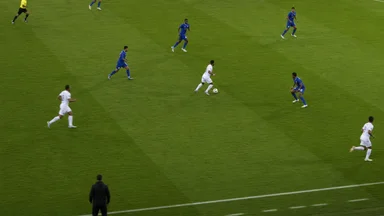
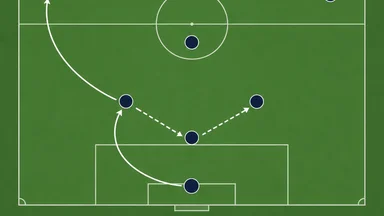
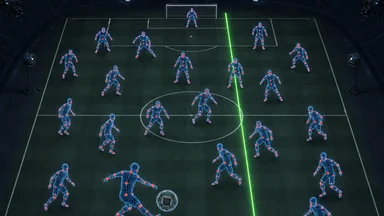
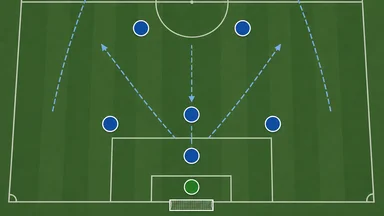
Kamou Malo's system relies on extreme narrowness and discipline. The back four—typically Yago Aziz at right-back, Dayo and Tapsoba as centre-backs, and Issa Kaboré at left-back—maintain a horizontal spacing of no more than 15 metres between the full-back and the nearest centre-back. The midfield four tuck in even tighter, with the wide midfielders often standing just 10 metres from the central pair. The two forwards drop deep to form a 4-4-2 that is actually a 4-4-2-0 in possession, with no player staying high. This creates a dense central block that is extremely difficult to play through. Opponents are forced to attack down the flanks, where Burkina Faso's full-backs and wide midfielders double-team the ball carrier. When a cross does come in, the central defenders and defensive midfielders swarm the landing zone, often outnumbering attackers three to one. The result is a clearance rate that borders on the obsessive. Against Guinea in October 2025, Burkina Faso cleared 97 times, and Guinea managed only 0.4 xG from 12 shots, none of which came from inside the six-yard box. The system essentially dares opponents to score from distance or from set pieces, and so far, the data shows it works.
Key Personnel: Edmond Tapsoba and Issoufou Dayo
At the heart of the defensive block are the two centre-backs, Edmond Tapsoba and Issoufou Dayo. Tapsoba, who plays for Bayer Leverkusen in the Bundesliga, is the more technically accomplished of the pair. He averages 6.2 clearances per game for Burkina Faso, but also contributes 4.1 interceptions and 2.3 tackles. His reading of the game allows him to step out of the defensive line to intercept passes before they reach dangerous areas. Dayo, who plays for Rennes in Ligue 1, is the more physical presence. He leads the team in aerial duels won (78% success rate) and is the primary target for clearing headers from corners and free kicks. Together, they form a complementary partnership that has conceded only three goals in six qualifying matches. Their partnership is not without risks, however. Both players are prone to the occasional lapse in concentration, particularly when dealing with quick switches of play. Against Egypt in November 2025, Tapsoba was caught out of position on a long diagonal ball, leading to a one-on-one chance that only a last-ditch clearance from Dayo prevented. Such moments highlight the fine margins on which this system operates.
Set-Piece Vulnerabilities: The Achilles' Heel
For all its success in open play, Burkina Faso's compact 4-4-2 has a notable weakness: set pieces. Because the team defends so narrowly, they often concede corners and free kicks in wide areas. In six matches, they have faced an average of 7.2 corners per game, the highest among all African qualifying teams. And while their clearance rate is high, the sheer volume of set pieces creates danger. Against Algeria in October 2025, Burkina Faso conceded two goals from corner kicks in a 3-1 loss. In both instances, the compact block left too much space at the near post, allowing Algeria's attackers to win headers unchallenged. The set-piece issue is exacerbated by the fact that Burkina Faso's forwards are not known for their defensive work rate. When the opponent wins a corner, the two strikers often fail to track back, leaving the defence outnumbered. Coach Malo has tried to address this by instructing the wide midfielders to drop into the box, but this leaves space for opposition full-backs to attack the second ball. The data shows that Burkina Faso concede 0.35 goals per game from set pieces, accounting for nearly 90% of all goals conceded. If Egypt and Algeria can exploit this weakness, the entire defensive system could unravel.
The Risks Ahead: Tests Against Egypt and Algeria
Burkina Faso's next two matches in qualifying are against Egypt (away) and Algeria (home). These are the two highest-ranked teams in the group, and both possess the attacking quality to test the compact 4-4-2 to its limits. Egypt, under their new coach, have evolved into a more direct team, relying on Mohamed Salah's ability to dribble at defenders and draw fouls. Salah's tendency to cut inside from the right could cause problems for Burkina Faso's left-back, who is often left isolated when the wide midfielder tucks in. Egypt also have a strong aerial presence in the box, with players like Mahmoud Trezeguet and Ahmed Hassan Koka winning headers. If Egypt can force corners and free kicks, they may replicate Algeria's success. Algeria, meanwhile, have the technical quality to break down compact defences through quick passing and movement. Riyad Mahrez and Youcef Belaïli are adept at finding pockets of space between the lines, and their ability to shoot from distance could force Burkina Faso's defenders to step out of position. The Stallions' best hope is to sit deep, absorb pressure, and rely on counter-attacks led by the pace of forwards like Mohamed Konaté and Cyrille Bayala. But against teams that can control possession and limit counter-attacking opportunities, the system may struggle to create chances of its own.
Trade-Offs: What the Compact 4-4-2 Costs in Attack
Burkina Faso's defensive solidity comes at a clear cost: their attacking output has plummeted. In six qualifying matches, they have scored only five goals, an average of 0.8 per game. That is down from 1.5 per game in the previous cycle. The compact block leaves the forwards isolated, often receiving the ball with their backs to goal and no support from midfield. Burkina Faso's possession average has dropped to 38%, the lowest among the top five teams in the group. Their pass completion rate in the final third is just 62%, reflecting the difficulty of building attacks against a packed defence. The team relies heavily on set pieces and long balls to create chances. Against Cape Verde, their only goal came from a corner kick. Against Guinea, a long ball over the top led to a penalty. The lack of creativity in open play is a serious concern, especially against teams that can defend set pieces well. If Burkina Faso fall behind early, they may lack the tools to mount a comeback. The trade-off is clear: they are difficult to beat, but also difficult to score for. In a qualifying group where goal difference could be decisive, this may prove costly.
Counter-Arguments: Could the System Be Sustainable?
Despite the attacking limitations, there are reasons to believe the compact 4-4-2 could be sustainable for Burkina Faso. First, the team's defensive record is not a fluke; it is built on repeatable patterns of play. The clearance-heavy approach is a deliberate strategy to minimise high-quality chances, and the data shows that opponents are creating fewer dangerous opportunities. Second, Burkina Faso's players are well-suited to the system. Tapsoba and Dayo are both experienced in high-pressure defensive environments at club level. The midfielders, such as Gustavo Sangaré and Adama Guira, are disciplined and hard-working, willing to run for 90 minutes without the ball. Third, the system is mentally taxing for opponents. Teams that face Burkina Faso often become frustrated by the lack of space and the constant clearances, leading to rushed shots and poor decision-making. Against Guinea, for example, the opposition attempted 14 shots from outside the box, none of which were on target. If Burkina Faso can maintain their concentration and avoid set-piece lapses, they could grind out results against stronger teams. The key will be to score first, allowing them to sit even deeper and invite pressure. In their 1-0 win over Cape Verde, they scored early and then defended for 80 minutes, a template they will hope to repeat.
Historical Context: The Evolution of African Defensive Tactics
Burkina Faso's approach is part of a broader trend in African football towards pragmatic, defence-first tactics. In recent World Cup qualifiers, teams like Tunisia, Morocco, and Senegal have all used compact defensive blocks to neutralise stronger opponents. Morocco's run to the semi-finals of the 2022 World Cup was built on a 4-4-2 that prioritised defensive organisation and counter-attacks. Burkina Faso's system is an extreme version of this philosophy, sacrificing possession and attacking flair for defensive solidity. Historically, African teams have often been criticised for being too open and naive, but the current generation of coaches is increasingly embracing European-style tactical discipline. Kamou Malo, who studied under Portuguese coaches during his playing career, has brought a European emphasis on shape and structure to the Burkina Faso national team. The results so far suggest that this approach can work at the continental level, but the true test will come against top-tier opposition. If Burkina Faso can secure a result against Egypt or Algeria, it will validate the system as a viable path to World Cup qualification.
Potential Adjustments: What Could Malo Change?
If the compact 4-4-2 begins to show cracks, Malo has several adjustments he could make. One option is to switch to a 5-4-1 in defensive phases, adding an extra centre-back to deal with aerial threats from set pieces. This would allow Tapsoba and Dayo to focus on clearing while a third centre-back covers the near post. Another option is to instruct the wide midfielders to press higher, preventing crosses from being delivered in the first place. This would reduce the number of corners conceded, but it would also leave space behind for opposition full-backs to exploit. A third option is to use a more attacking substitution pattern, bringing on an extra forward when trailing to increase the chances of scoring. Against Algeria, Malo waited until the 75th minute to make attacking changes, by which point the game was already lost. Earlier substitutions could help Burkina Faso impose themselves on the game before the opposition settles into a rhythm. However, any adjustment carries risks. The compact 4-4-2 is a finely tuned system, and changing it could disrupt the defensive cohesion that has made the team so effective. Malo must weigh the benefits of adaptation against the danger of overcomplicating a simple but successful formula.
Conclusion: A High-Risk, High-Reward Strategy
Burkina Faso's compact 4-4-2 has turned them into the most defensively formidable team in African World Cup qualifying. The clearance numbers, the goals-against average, and the xG data all point to a system that works—at least against lower-ranked opponents. But the upcoming matches against Egypt and Algeria will reveal whether the approach can hold against elite attacking talent. The set-piece vulnerability is a clear weakness that stronger teams will exploit, and the lack of attacking creativity could leave the team unable to respond if they fall behind. Yet there is also reason for optimism. The system is simple, repeatable, and well-suited to the players available. If Burkina Faso can score first and maintain their defensive discipline, they have a realistic chance of securing the points needed to qualify for the World Cup. The next two matches will define the legacy of this tactical experiment. For now, the Stallions are the most statistically surprising team in Africa, and their journey is one of the most compelling stories of the 2026 qualifying campaign.