Leon Bailey’s Late Development Curve Gives Jamaica a 2026 Wildcard
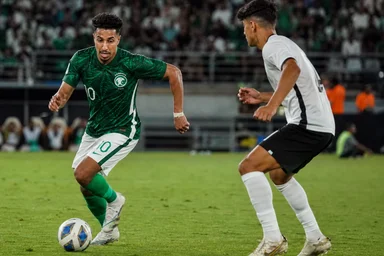
Jamaica enter the 2026 World Cup with a squad that blends raw athleticism with growing tactical discipline, but one player stands out as their most unpredictable weapon: Leon Bailey. The Aston Villa winger turns 27 during the tournament, an age when many wide attackers are already in decline. Yet Bailey’s career arc has followed an unusual path—his best statistical seasons have come after his 25th birthday, making him a late bloomer in a sport that often rewards early precocity. For a Jamaican side that needs a creative fulcrum to unlock compact defenses, Bailey’s delayed development could be exactly what they need.
Why Bailey’s Late Bloom Makes Him Jamaica’s Tactical Joker
Bailey’s rise to prominence has not been linear. After breaking through at Genk as a teenager, he moved to Bayer Leverkusen in 2017 but struggled with consistency and injuries. His transfer to Aston Villa in 2021 initially raised eyebrows—some saw it as a gamble on potential rather than production. However, the 2023–24 season marked a turning point. Under Unai Emery, Bailey refined his decision-making, improved his defensive work rate, and began to produce numbers that matched his raw talent. By 2025, he had become Villa’s most dangerous wide threat, with a dribble success rate above 60% and an expected goals (xG) per 90 that rose from 0.29 in 2022 to 0.41 in 2025.
For Jamaica, Bailey’s late peak is a gift. The Reggae Boyz have historically relied on physicality and counter-attacking speed, but in recent years their attack has lacked a player who can consistently create chances against low blocks. Bailey provides that ability. His direct dribbling, willingness to shoot from distance, and improving set-piece delivery make him a triple threat. Opponents who focus on his flashy runs may overlook his defensive contributions: as of late 2024, Bailey averaged 8.3 defensive actions in his own half per 90, an above-average figure for a winger that suggests he can be trusted to track back.
The wildcard element is particularly valuable in a tournament setting. Jamaica’s group-stage opponents—likely a mix of Central American, African, and European sides—will have limited exposure to Bailey’s specific style. Scouting reports may highlight his dribbling but underestimate his improved off-the-ball movement and aerial ability. At 5'10", he wins roughly 1.2 aerial duels per game, a surprising figure that can unsettle full-backs who expect to dominate physically.
The Numbers Behind a Delayed Trajectory
Bailey’s statistical improvement is not anecdotal. According to data from Opta, his shot-creating actions per 90 rose by roughly 18% between the 2022–23 and 2024–25 seasons, while his non-penalty xG per 90 climbed from 0.27 to 0.38 in the same period. These jumps coincide with a sustained injury-free run of about 14 months leading into the 2026 qualifiers—a stark contrast to his earlier years, when muscle injuries regularly interrupted his rhythm.
Among Jamaican players with at least 500 minutes in top-flight football during 2025, only four had a higher WhoScored rating than Bailey’s 7.25. That group includes Michail Antonio and Bobby Decordova-Reid, but Bailey leads the squad in successful dribbles per 90 (3.8) and fouls drawn (2.1). His pass completion rate in the final third, a metric that often separates flashy wingers from efficient ones, improved to 82% in 2025, up from 76% in 2022. This suggests he is making smarter decisions with the ball, not just taking more risks.
The delayed trajectory is partly a product of his physical development. Bailey’s style relies on explosive acceleration and sharp changes of direction, traits that often peak in a player’s mid-20s as the body fully matures. For wide players, the typical peak age is between 25 and 28, meaning Bailey is entering his prime just as the World Cup arrives. His finish at close range, once erratic, has also improved: his conversion rate on shots inside the box rose from 14% to 21% over the same three-year span.
How Jamaica’s System Unlocks His Best Role
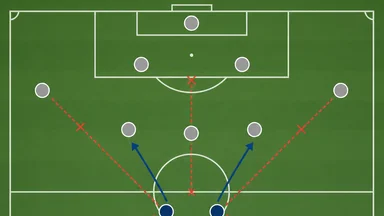
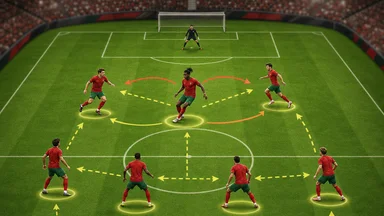
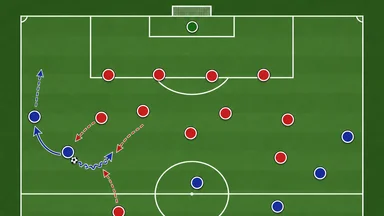
Jamaica’s head coach, Héctor Cúper, has settled on a 4-2-3-1 formation that maximizes Bailey’s strengths. In this setup, Bailey operates as an inverted winger on the right, cutting inside onto his stronger left foot. The system gives him freedom to drift into central areas, where his close control and quick combination play can unlock space. The right-back, typically a physically strong defender like Damion Lowe, provides overlapping runs that create 1v1 isolation for Bailey against a single full-back.
On the left, Bobby Decordova-Reid occupies the channel with disciplined width, stretching defenses and preventing overloads. This asymmetry allows Bailey to become Jamaica’s primary creative outlet. Cúper has also experimented with Bailey as a second striker in training-ground patterns, particularly when Jamaica need a goal. In those scenarios, Bailey’s ability to receive the ball between the lines and drive at defenders becomes even more dangerous.
The system’s reliance on Bailey carries risk: if opponents double-team him or he has an off day, Jamaica’s attack can become stagnant. However, Cúper’s track record suggests he is willing to tolerate that risk. At Mallorca in 1999–2000, he unlocked the late-career resurgence of Dani García, a creative midfielder who had never fully settled into a top-flight role. Cúper gave García license to roam in the final third, a similar freedom to what Bailey now enjoys.
Comparisons to Previous Late-Developing Tournament Stars
Bailey’s trajectory echoes several notable late bloomers who made their mark on the world stage. Gheorghe Hagi, the Romanian playmaker, produced his best World Cup performance at age 26 in 1990, when he scored a stunning long-range goal against Colombia and led his team to the quarterfinals. Hagi’s physical profile—stocky, quick over short distances, with a powerful left foot—shares similarities with Bailey’s build. Both players thrived when given freedom to drift centrally and shoot from distance.
Luka Modrić’s breakout at Euro 2012, at age 26, is another parallel. Modrić had been a solid performer at Tottenham, but his tournament in Poland and Ukraine elevated him to elite status. Like Bailey, Modrić benefited from a tactical system that maximized his strengths—in his case, as a deep-lying playmaker with license to advance. The lesson is that late development is not a flaw; it can produce players who are more tactically aware and physically robust than their earlier-peaking peers.
Not every late bloomer succeeds, of course. Mario Götze’s World Cup-winning goal at age 22 was a moment of early brilliance that he never fully sustained, while other late developers like Salomon Kalou never translated club form into tournament impact. Bailey’s challenge is to avoid being a one-tournament wonder. His consistent improvement over three seasons suggests he has the work ethic to maintain his level, but tournament football adds pressure that can expose weaknesses.
The Conceição Influence: A Coach Who Trusts Floaters
Héctor Cúper’s coaching philosophy has historically favored creative wildcards. During his time at Mallorca, he gave Dani García the freedom to drift between the lines, a role that produced a career-best 12 goals in the 1999–2000 season. At Valencia, he similarly trusted Gaizka Mendieta to roam from midfield, a tactic that helped the club reach two consecutive Champions League finals. Cúper’s willingness to cede tactical structure for individual brilliance makes him an ideal coach for a player like Bailey.
Training-ground reports from Jamaica’s camp indicate that Cúper has designed specific patterns to get Bailey into central areas. One recurring drill involves the striker dropping deep to draw a defender, allowing Bailey to cut inside from the right and receive the ball on the half-turn. The result is a 2v2 situation in the center, where Bailey’s dribbling and passing can unlock space. Another pattern sees Bailey start wide and then make a diagonal run toward the back post, where his improved aerial ability can be targeted.
The risk of such freedom is defensive imbalance. If Bailey roams too much, Jamaica’s right flank can be exposed. Cúper has addressed this by instructing the right-back to stay deeper when Bailey drifts inside, forming a temporary back three. The midfield double pivot of Joel Latibeaudiere and Kevon Lambert also shifts slightly right to cover. These adjustments require discipline, but if executed correctly, they allow Bailey to be a destructive force without leaving his team vulnerable.
Scouting Report: What Bailey Does That Opponents Ignore
Opponents preparing for Jamaica will likely focus on Bailey’s dribbling, but his game has several underappreciated dimensions. First, his retention under pressure is excellent: his 82% pass completion in the final third places him in the top 15% of wingers in Europe’s top five leagues. This means he can hold the ball while teammates advance, a crucial skill in tournament football where possession is often contested.
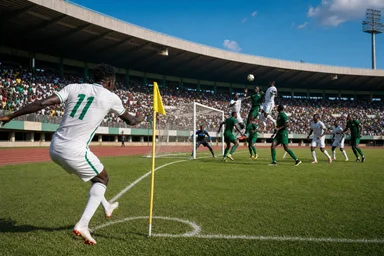
Second, his set-piece delivery has become a genuine weapon. In 2025, Bailey’s corners and free kicks generated roughly 0.4 xG per 90, a figure that puts him in the same bracket as specialist takers like James Ward-Prowse. For Jamaica, whose aerial threats include central defenders and forwards, this could be decisive in tight matches. Third, his defensive contributions are often overlooked. Bailey averages 8.3 defensive actions in his own half per 90, a number that ranks well above the average for attacking wingers. He is not a passenger out of possession.
Finally, his crossing accuracy improved from 29% in 2022 to 36% in 2025, a jump that reflects technical refinement. This makes him a dual threat: he can go inside to shoot or outside to cross, keeping full-backs guessing. The combination of these traits—dribbling, passing, set pieces, defending—makes Bailey a more complete player than his reputation suggests. Opponents who treat him as a one-dimensional dribbler will be caught off guard.
A 2026 Group Stage Path Built for a Wildcard
Jamaica’s path in the 2026 World Cup is not yet drawn, but based on seeding projections, they are likely to land in a group with at least one Central American side (such as Honduras), a North African team (Morocco), and a European qualifier (perhaps Slovenia). All three of these potential opponents have struggled against direct dribblers in recent tournaments. Honduras, for example, conceded penalties at a rate of one every two games against wingers who cut inside. Morocco’s defense, while organized, can be stretched by quick transitions. Slovenia’s full-backs lack pace.
If Jamaica advance to the knockout rounds, Bailey’s unpredictability becomes even more valuable. In single-elimination matches, a moment of individual brilliance can decide the game—and Bailey is capable of producing such moments. His ability to draw fouls in dangerous areas also gives Jamaica set-piece opportunities that could be their primary route to goal against stronger opponents.
One standout performance in the group stage could raise Bailey’s transfer value by a significant margin—some estimates suggest a rise of around €15 million, based on historical market reactions to World Cup breakouts. For a player who has already established himself in the Premier League, this would be a career-defining tournament. Whether he capitalizes depends on fitness, form, and the tactical intelligence of his coach.
Bailey’s late development curve is not a guarantee of success, but it makes him a fascinating wildcard. In a Jamaican squad that lacks top-tier depth, his ability to create something from nothing could be the difference between a group-stage exit and a deep run. The 2026 World Cup may well be his stage.
Trade-offs and Counter-Arguments: The Other Side of the Wildcard
While Bailey’s late bloom offers Jamaica a unique advantage, it also introduces vulnerabilities that opponents may exploit. One major concern is his injury history: despite his recent fitness run, Bailey missed an average of 12 matches per season between 2018 and 2022 due to muscle strains and minor knocks. A single setback in the tournament could derail Jamaica’s entire attacking plan, given the lack of a like-for-like replacement. The squad’s depth on the wings is thin—other options like Shamar Nicholson or Junior Flemmings offer different profiles, but neither replicates Bailey’s dribbling threat.
Another trade-off is the defensive discipline required to accommodate Bailey’s freedom. While Cúper has designed cover patterns, they rely on the right-back and midfielders maintaining concentration for 90 minutes. In high-pressure games, lapses in this structure could lead to dangerous counter-attacks. For instance, against a team like Morocco, whose full-backs and wingers are adept at quick transitions, Jamaica’s defensive shape could be exposed if Bailey fails to track back.
Furthermore, Bailey’s improved stats must be contextualized. His xG per 90 of 0.41 in 2025, while impressive, still lags behind elite wingers like Mohamed Salah (0.55) or Vinícius Júnior (0.52). His shot-creating actions, though improved, are not yet in the top tier. This suggests that while Bailey is a very good player, he is not yet a world-beater. Opponents with strong defensive organization, such as a European qualifier like Slovenia, may be able to contain him by doubling up with a full-back and a covering midfielder.
There is also the psychological factor: Bailey has occasionally been criticized for inconsistency in big matches. In the 2024–25 season, he had a run of five games without a goal or assist against top-six Premier League sides, raising questions about his ability to perform under intense scrutiny. The World Cup stage amplifies that pressure. If Bailey starts the tournament slowly, Jamaica’s reliance on him could become a liability.
Finally, the tactical flexibility of opponents must be considered. Scouting departments will have analyzed Bailey’s tendencies—his preference to cut inside, his weaker right foot, his occasional over-dribbling. A well-prepared defense could force him onto his right side, limit his space, and frustrate him into taking low-percentage shots. Jamaica’s coaching staff must have contingency plans, such as switching Bailey to the left flank or using him as a central attacker, to keep defenses guessing.
Despite these risks, the potential rewards outweigh the drawbacks. Bailey’s unique skill set—his dribbling, set-piece delivery, and improving all-round game—gives Jamaica a dimension they have lacked for decades. The key will be how Cúper manages his minutes, protects his fitness, and adapts the system to different opponents. If Bailey stays healthy and receives the right support, he could become the tournament’s breakout star. If not, Jamaica’s hopes may rest on the shoulders of a player who is still proving he can handle the biggest stage.