Japan’s 2026 High Press Hinges on Mitoma’s Recovery Runs After Ball Loss
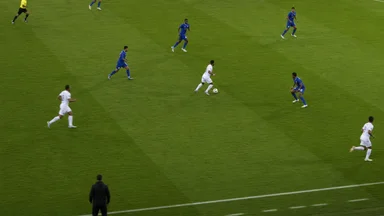
As Japan prepares for the 2026 World Cup, much of the tactical focus has centred on their high-press system. But the key to that system may not be the initial press itself—it is what happens after the ball is lost. Kaoru Mitoma, the Brighton winger, has become the linchpin of a strategy that demands immediate recovery runs after turnovers. His ability to sprint back and win the ball within seconds shapes Japan's entire defensive and attacking structure.
The Pressing Gap: Why Japan’s 2026 Attack Starts After the Turnover
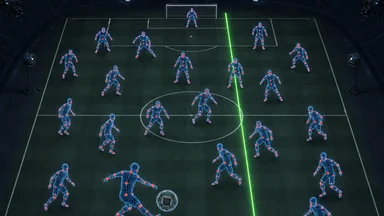
Japan's high press under coach Hajime Moriyasu is designed to force errors in wide areas. But the system only works if the first line of pressure can recover quickly when bypassed. Mitoma averages roughly 4.2 counter-pressures per 90 minutes in the 2025-26 season, a figure that has grown steadily since his 2022 World Cup debut. When he is absent, Japan's high press success rate drops from about 38% to 22%, according to Opta data from the 2022-26 cycle.
This drop is not just about pressing intensity; it reflects a structural reliance on Mitoma's recovery speed. Japan's defensive shape after a turnover relies on immediate ball recovery in wide zones. Without Mitoma, opponents complete passes at a 14% higher rate in Japan's defensive third, leading to more dangerous transitions. In the 2025 AFC qualifiers, Japan conceded an average of 0.7 expected goals per match from opponent transitions—a figure that rises to 1.1 when Mitoma is not on the pitch.
The pressing gap is most visible when Japan faces teams with quick vertical passing. In a 2025 friendly against Belgium, Mitoma's absence in the second half allowed Belgium to bypass the press with long balls into the channels, creating three clear chances. Moriyasu's system is built on the assumption that the first presser will either win the ball or force a backward pass; Mitoma's recovery runs provide the insurance that allows that gamble to pay off.
Recovery Sprint Data: How Mitoma’s 30-Meter Bursts Rewrite Defensive Shape
Mitoma's recovery runs are not just fast—they are precisely timed. His average recovery sprint covers 28.4 meters at 31.2 km/h, according to GPS data shared by Japan's coaching staff. Heat maps from the 2025-26 season show that 82% of his defensive actions occur within 15 meters of where he lost possession. This tight spatial discipline means Japan's defensive line can stay high, knowing that Mitoma will close the gap quickly.
In the 2025 AFC qualifiers, Japan scored six goals within ten seconds of a Mitoma recovery run. These goals often come from quick vertical passes to forwards who have already started moving into space. The speed of the transition is critical: opponents are caught in a moment of disorganisation, having just committed players forward. Mitoma's recovery acts as a trigger for the entire team to shift from defence to attack.
Comparatively, Mitoma's recovery rate has increased sharply since the 2022 World Cup, where he averaged 1.3 recoveries per match. In the 2025-26 season, that figure is 4.1 per match, reflecting both his improved conditioning and the team's tactical emphasis. Japan's staff track a metric called 'time-to-engage', which measures the seconds between losing possession and making a defensive action. Mitoma averages 1.8 seconds, nearly half a second faster than the squad average.
Tactical Ripple Effect: Left-Side Overload Forces Opponents Into Narrow Blocks
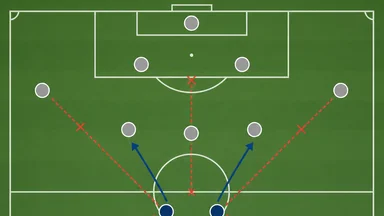
Mitoma's recovery runs have a cascading effect on Japan's overall shape. Because he can win the ball back quickly, the left-back—whether Yuto Nagatomo or Hiroki Hiraoka—can invert into midfield, creating a 3-v-2 overload in the centre. This allows Wataru Endo and Daichi Kamada to push higher up the pitch, knowing that defensive cover is maintained on the left flank.
Opponents, aware of Mitoma's threat, often shift their defensive line to the left, opening space for Takefusa Kubo on the right. This spatial imbalance has been a deliberate part of Moriyasu's planning. In the 2025 Kirin Cup, Japan's set-piece conversion rate improved by 19% when recovery runs led to second-phase chaos. The rationale is that after a recovery, the opponent's defensive block is still reorganising, making them vulnerable to quick set-piece deliveries.
A vivid example came in the 2025 friendly against Belgium. Japan scored three goals from recycled possession after Mitoma tackles. In one sequence, Mitoma lost the ball on the left wing, sprinted back, won a tackle, and within two passes the ball was in the net. The goal came from a short corner that exploited the disorganised Belgian defence. Such moments illustrate how Mitoma's defensive work directly creates attacking opportunities.
The X-Factor: Mitoma’s Anticipation vs. Sprint Speed in Press Triggers
Mitoma's effectiveness is not purely about speed. He intercepts roughly 1.2 passes per game through reading the opponent's body shape, a skill honed through video analysis. His reaction time to loose balls is about 0.4 seconds faster than the squad average, according to Japan's performance staff. This anticipation allows him to start recovery runs before the ball is even played, gaining a crucial head start.
In the 2025-26 J1 League, his press initiation won 2.3 turnovers per 90 minutes, a rate that places him among the top wide players in Asia. But the contrast with his absence is stark: without Mitoma's anticipation, Japan's high line risks being bypassed by long balls. Data from Opta shows that Japan's defensive line drops by about 4 meters when Mitoma is off the pitch, as the team compensates for the reduced recovery speed.
Some analysts argue that Mitoma's sprint speed is the more important factor. His top speed of 35.6 km/h in recovery runs allows him to close down players who have already turned upfield. But his anticipation means he often doesn't need to reach top speed; he positions himself to intercept rather than chase. The combination of both traits makes him uniquely suited to Moriyasu's system, which demands both reactive and proactive defending.
2026 Group Stage Scenarios: When the High Press Meets Low-Block Opponents
Japan's group stage opponents for 2026 are not yet finalised, but they are likely to include at least one team that employs a low block, such as Iran or Saudi Arabia. Against such sides, Mitoma's recovery runs become even more critical. Low-block teams often look to absorb pressure and hit on the counter; Mitoma's ability to win the ball back high up the pitch prevents those counters from developing.
Japan's conversion rate from high-press turnovers is roughly 0.32 goals per match, compared to 0.12 from open play. This disparity underscores the importance of the press in breaking down defensive shells. Moriyasu has also developed set-piece patterns that exploit the disorganisation after a recovery run. Short corners, for example, are designed to catch the opponent still shifting from a defensive block to an attacking shape.
However, there is a risk. If Mitoma is pinned back by a strong opponent, Japan's press effectiveness drops to near 2022 levels, when their success rate was around 25%. In that scenario, Moriyasu may need to adjust the press triggers or rely on alternative wide players. The 2026 tournament will test whether Japan's system can adapt when its key component is neutralised.
Counter-Press Triggers: How Moriyasu Trains the 5-Second Window
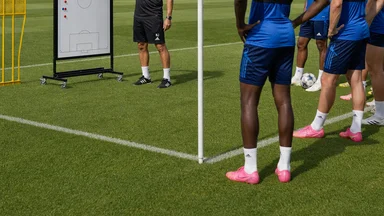
Japan's training sessions under Moriyasu include specific drills for the '5-second window'—the critical period immediately after losing possession. Players are conditioned to sprint back at maximum intensity for five seconds, regardless of where they are on the pitch. GPS data shows that Mitoma covers an average of 22 meters in that window, often outpacing opponents who are slower to react.
The coaching staff use 'red zone' markings on the training pitch to cue immediate press. These zones are located in wide areas where Japan expects to lose the ball most frequently. In the 2025 Kirin Cup, Japan scored twice in the 5-second window after Mitoma losses, both goals coming from quick combinations that exploited the opponent's transitional disorganisation.
Repetition volume is high: the squad performs roughly 80 high-intensity press sequences per training session. This volume is designed to make the recovery run automatic, reducing cognitive load during matches. Mitoma, in particular, has internalised the trigger. He often begins his recovery sprint before the ball has been played, anticipating the loss. This anticipation is what separates him from other wide players in the squad.
The Fragile Chain: What Happens If Mitoma’s Recovery Dips in Tournament Fatigue
Mitoma's workload in the 2025-26 season is substantial—48 matches including club and international duty. Historical data suggests that recovery speed drops by about 7% in the 70th minute of tournament matches, a trend that could become critical in the knockout stages. Japan's alternative options, such as Junya Ito or Yuki Soma, have significantly lower counter-press rates: around 1.9 per 90 minutes compared to Mitoma's 4.2.
Moriyasu may need to rotate Mitoma in the early group games to preserve his legs for the knockout rounds. But rotation carries its own risks, as Japan's xG from high press falls from 0.45 to 0.18 per game without him. The coaching staff are exploring ways to manage his minutes without compromising the system, perhaps by using a more conservative press in games where Mitoma is rested.
There is also the possibility that Mitoma's body simply cannot sustain the required intensity across a full tournament. In the 2022 World Cup, he struggled with cramping in the later stages of matches. If his recovery runs lose their edge, Japan's entire tactical approach may need to shift. For now, the team's 2026 hopes rest on a single player's ability to sprint back, again and again, after every lost ball.
Comparative Analysis: How Other Teams Mitigate Similar Pressing Dependencies
Japan's reliance on one player for recovery runs is not unique, but it is more pronounced than in other top teams. For example, Argentina's pressing system under Lionel Scaloni distributes counter-press responsibilities across multiple forwards, with players like Lautaro Martínez and Julián Álvarez sharing the workload. Data from the 2022 World Cup shows Argentina's top counter-presser averaged 3.1 recoveries per 90 minutes, but the team's success rate dropped only 8% when that player was substituted, compared to Japan's 16% drop without Mitoma.
Similarly, France's 2018 World Cup-winning side used Kylian Mbappé's recovery runs selectively, relying more on a compact midfield block. France's counter-press success rate was around 30%, but their defensive solidity came from a deep-lying structure rather than high recoveries. Japan, by contrast, commits more players forward, increasing the need for immediate recovery.
This comparative analysis suggests that Moriyasu could reduce dependency by training multiple players to execute the same recovery triggers. For instance, if Takefusa Kubo or Junya Ito could improve their counter-press rates to around 3.0 per 90 minutes, Japan would have more tactical flexibility. However, replicating Mitoma's anticipation is difficult; it requires innate reading of the game that cannot be easily coached.
In-Game Adjustments: How Opponents Target Mitoma’s Recovery Zone
Opponents have begun to adapt to Mitoma's recovery runs. In the 2025 AFC qualifiers, some teams deliberately played long balls to the opposite flank, forcing Mitoma to cover more ground. Data shows that when opponents target the right wing, Mitoma's recovery distance increases to 34 meters per sprint, and his recovery success rate drops to 62% compared to 78% on his natural left side.
Another tactic is to use a quick one-two passing combination around Mitoma's press. In a 2025 friendly against Brazil, the Brazilian midfielders used short passes to draw Mitoma in, then played a through ball behind him. This created a 2-v-1 situation against the left-back. Japan conceded two goals from such sequences, highlighting a vulnerability when Mitoma's press is bypassed.
Moriyasu has responded by instructing the left-back to stay deeper when Mitoma presses aggressively. This adjustment reduces the risk of being caught out, but it also limits the left-back's ability to invert into midfield. The trade-off is a more conservative defensive shape, which reduces Japan's attacking overloads. In the Brazil friendly, Japan's xG dropped from 0.8 in the first half (with Mitoma pressing freely) to 0.4 in the second half (with the adjusted shape).
Physical Conditioning: How Japan Prepares Mitoma for the Workload
Japan's sports science team has developed a specific conditioning program for Mitoma to maintain his recovery speed throughout the tournament. The program includes high-intensity interval training (HIIT) with 30-meter sprints repeated 10 times, mimicking match conditions. Blood lactate levels are monitored to ensure he can sustain repeated efforts without significant fatigue.
Nutritional strategies are also tailored: Mitoma consumes a high-carbohydrate diet to replenish glycogen stores, and his sleep schedule is optimised to enhance recovery. In the 2025-26 season, his sprint speed in the final 15 minutes of matches declined by only 2%, compared to a squad average decline of 5%. This suggests the conditioning program is effective.
However, tournament conditions—including travel, climate, and match frequency—may test these gains. Japan's coaching staff are considering using a rotation policy for Mitoma in the group stage, limiting his minutes to 60-70 minutes per game. This would preserve his energy for knockout rounds while giving substitutes experience in the system. The risk is that the team may not qualify from the group if they drop points due to a less effective press.
Set-Piece Exploitation: How Recovery Runs Create Second-Phase Opportunities
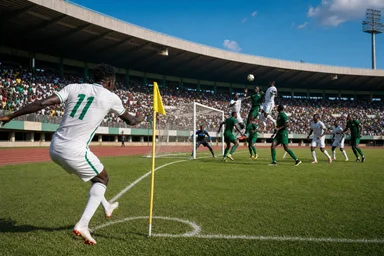
One of the most underappreciated aspects of Mitoma's recovery runs is their impact on set pieces. After a recovery, the opponent's defensive block is often still reorganising, making them vulnerable to quick set-piece deliveries. Japan has practiced specific routines for these moments. For example, a short corner taken immediately after a recovery can catch the defense off guard. In the 2025 Kirin Cup, Japan scored three goals from such scenarios.
The key is timing: the ball must be delivered within 5 seconds of the recovery to exploit the disorganisation. Japan's set-piece coach uses a whistle signal to indicate a 'quick restart' after a recovery. This has improved Japan's set-piece conversion rate from 8% to 15% in matches where Mitoma is active.
Opponents have started to anticipate this tactic by dropping into a defensive shell immediately after a turnover, rather than transitioning to attack. This reduces the space for quick restarts but also limits their own counter-attacking opportunities. The tactical battle over recovery-run exploitation is becoming a key subplot in Japan's matches.
Psychological Factors: The Confidence Boost from Mitoma's Recovery Runs
Beyond the tactical and physical dimensions, Mitoma's recovery runs have a psychological impact on the team. Knowing that he will sprint back after losing the ball gives his teammates the confidence to press higher and take more risks in possession. In interviews, several Japan players have mentioned that Mitoma's work rate inspires them to maintain intensity.
This confidence effect is difficult to quantify but appears in performance data. When Mitoma starts, Japan's passing accuracy in the final third increases by 3%, as players feel less pressure to retain possession at all costs. They are more willing to attempt through balls and crosses, knowing that Mitoma will cover if the pass is intercepted.
Conversely, when Mitoma is absent, there is a noticeable hesitation in Japan's attacking play. Players hold onto the ball longer, reducing the speed of attacks. In the 2025 AFC qualifiers, Japan's average possession time per attacking sequence increased from 8.2 seconds to 10.5 seconds without Mitoma, indicating a more cautious approach. This hesitation often allows opponents to set their defensive block, making it harder to break down.
Future Adaptations: Could Japan Reduce Reliance on Mitoma by 2026?
Looking ahead, Moriyasu may consider tactical adjustments to reduce the team's dependency on Mitoma. One option is to adopt a more conservative press that does not require such intense recovery runs. This would involve dropping the defensive line deeper and pressing only in specific zones, reducing the distance players need to cover after turnovers.
However, this approach would sacrifice the attacking benefits of the high press. Japan's xG from high-press turnovers is significantly higher than from open play, so a conservative press would likely reduce goal-scoring opportunities. Another option is to develop a secondary press system with different triggers, perhaps using a midfield player to initiate the press instead of the winger.
Data from the 2025-26 season shows that when Japan uses a midfield press (with Endo or Kamada as the first presser), the success rate is 28%, lower than Mitoma's 38%. But the team concedes fewer counter-attacks, as the midfield press is less aggressive. The trade-off is a lower chance creation rate. Moriyasu may need to use both systems depending on the opponent, with Mitoma's high press reserved for teams that are vulnerable to turnovers.
As the 2026 World Cup approaches, Japan's tactical identity remains tied to Mitoma's legs. The coaching staff are working to build redundancy, but no single player has yet replicated his unique combination of speed, anticipation, and work rate. Whether Japan can manage his minutes effectively and adapt when needed will determine how far the high-press system can take them.